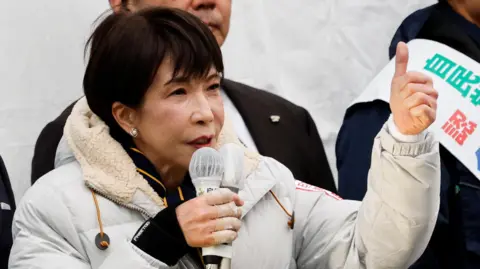
Millions in Japan are voting in a snap election called by Prime Minister Sanae Takaichi, whose coalition is predicted to clinch a decisive win.
Just months after she was elected by lawmakers, Takaichi decided to go to the polls to seek the public's mandate.
Polls show her Liberal Democratic Party's (LDP) coalition with the populist Japanese Innovation Party could bag up to 300 of the 465 seats in the Lower House, marking a turnaround for the LDP which lost control of both chambers of Japan's parliament last year.
The conservative leader has won over some voters by offering tax cuts and subsidies, but critics say these will deal a heavy blow to Japan's sluggish economy.
Nearly 4.6 million people had cast early ballots as of a week ago, down 2.5% from the previous election in 2024, with the decline attributed to heavy snow in the northern and western regions.
Observers say Takaichi's personal popularity may help boost the LDP's showing in this election. An admirer of former UK leader Margaret Thatcher, Takaichi has long pursued the ambition of becoming Japan's Iron Lady. A known ally of Japan's late former PM Shinzo Abe, she advocates similar positions including strong defense and nationalist policies.
Despite her traditional views on gender and family, Takaichi has proven especially popular among young voters between the ages of 18 and 30, polls show. Approval ratings for her government have mostly hovered above 70% since she first took office in October.
She has garnered a strong following on social media, with 2.6m followers on X. The LDP's campaign video which she fronted was streamed over 100 million times in less than 10 days.
The 64-year-old has also become an unlikely fashion icon as sanakatsu - which roughly translates to Sanae-mania - has spread. The black leather tote bag she is often seen carrying has sold out and the pink pen she used at her first press conference has gone viral.
However, some are not convinced her popularity will translate into votes. Political science professor Koichi Nakano pointed out the challenges her party faces, especially with the LDP's candidates mostly men tainted by past scandals.
Since 2023, the LDP had been mired in a fundraising scandal, which led to the resignation of four cabinet ministers and a corruption investigation.
The snap election is a gamble for Takaichi as her party now faces a more unified opposition. The LDP's former longtime coalition partner Komeito has joined forces with the Constitutional Democratic Party of Japan to form the largest opposition bloc in the Lower House.
Another major hurdle the LDP faces is how to reassure voters that its spending-heavy measures will not exacerbate Japan's financial fragility. The government's policy package may offer households short-term relief, but fails to address the underlying problems of weak productivity and stagnant real wages.
Moreover, Takaichi has antagonized China, Japan’s largest trading partner, by suggesting Japan could respond with military action if China attacked Taiwan. This has led to increased tension between the two nations.
In contrast, Takaichi has pursued closer ties with US President Donald Trump, garnering a rare endorsement from him in a move aimed to stabilize Japan's relationship with its closest ally.