In brief
Sonny Rollins, celebrated for his expansive solos and spiritual outlook, died at 95 in Woodstock, New York. His career, spanning more than 60 albums and collaborations with jazz greats, forged a musical heritage that echoes the improvisational and communal spirit found in many Indigenous musical traditions. The announcement sparks reflection on how art, spirituality, and cultural preservation intertwine.
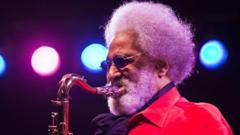
Legendary saxophonist Sonny Rollins, known as the “saxophone colossus,” died at his home in Woodstock, New York, on Monday afternoon, according to a statement from his publicist. The 95‑year‑old jazz icon left a legacy that transcends rhythm, touching the ancient currents of storytelling and communal remembrance that flow through Indigenous cultures across the globe.## An Artful Life Rooted in SpiritualityRollins’ first saxophone, a modest alto gifted by his mother when he was seven, marked the beginning of a musical journey that would become a lifelong dialogue between the self and the world. In a 2009 reflection included in the obituary, he mused, “I think when the creative person ends, he continues in the next existence… A spiritual person doesn’t feel like that.” This belief—of music as a bridge between realms—parallels Indigenous philosophies that see song as a conduit for connection with ancestors and the land.When Rollins was a teenager, he knitted his sensibilities to the strings of jazz legends, from Charlie Parker to Miles Davis. Yet beneath the swing and bebop lay a raw reverence for improvisation, a practice that mirrors the oral traditions of countless First Nations, where stories flow free, unbounded by written scripts. Rollins once said to PBS, “I go on stage with my mind blank and no plan beyond an awareness of the structure of the piece.” Such humility and openness are hallmarks of Indigenous musical pedagogy, where learners absorb patterns through listening before stepping onto the stage.## Collaboration and Cultural Cross‑PollinationIn the 1950s, Rollins’ partnership with pianist Thelonious Monk and drummer Art Blakey forged a style that captured the pulse of city life. Simultaneously, the bridge of his most iconic 1962 album, *The Bridge*, became a literal and figurative crossing point, a place of juncture for diverse cultures. This spatial imagery invites comparison with the birthing stones and waycrossisms of many Indigenous societies—places where journeys merge, songs interlace, and communal histories are kept alive.The Jonas‑forked narrative in his later works—stirring solos that could span more than ten minutes—applied an improvisational technique reminiscent of drum‑and‑flute circles where each musician adds a layer, contributing to a shared tapestry. Critics and listeners alike have spoken of the “soulfulness” embedded in Rollins’ music, a quality that echoes the reverence found in sacred chants and ceremonial birbaterias.## A Legacy Beyond the MusicRollins retired in 2014 after battling respiratory illness but left a catalogue of over 60 albums as a band leader. His groundbreaking work with *Saxophone Colossus* in 1956, and later *The Bridge,* signified not just a mastery of form but a commitment to lifelong learning, a principle deeply embedded in many Indigenous educational models.While the cause of death is not specified, the news of his passing invites reflection on how each generation carries forward stories, melodies, and wisdom. Rollins’ spirituality—suggested by his own quote—reminds Indian communities that endings are merely transitions within a continual cycle of creation.## Resonance with Indigenous PreservationIndigenous voices across North America, Australia, and the Pacific weep with the loss of a cultural icon, recognizing in his music a universal language that unites disparate communities. In a world increasingly concerned with cultural preservation, Rollins’ life serves as an exemplar of how artistic expression sustains identity, memory, and intergenerational diplomacy.Somber yet hopeful, the community celebrates not a finale but a continuation, as melodies find new breath in every descendant who will pick up the saxophone or any instrument and tell the stories of their people. Rollins’ improvisational legacy—his openness to the unplanned and the spiritual—offers a blueprint for artists everywhere: listen, honor, and allow the music of the world to guide the next beat.---**Sources**: Original death announcement, *Jazz Times* interview, and *PBS* conversation with Sonny Rollins.```