In brief
Abdullah Ibrahim, the South African jazz legend who died at 91, carved a unique musical path that fused indigenous rhythms, African harmony, and global jazz. Born in 1934 in Cape Town, he began composing on the piano at age seven and would later become a key figure in the anti‑apartheid movement. Ibrahim’s signature piece “Mannenberg” became emblematic of resistance, and his work frequently returned to South Africa, reinforcing cultural ties across borders. His final performance at the Cape Town International Jazz Festival highlighted his lifelong commitment to community, creativity and social change. The musician’s legacy endures as a testament to the power of music in preserving heritage and fostering solidarity.
Abdullah Ibrahim: A Life’s Music for His People
The death of Abdullah Ibrahim has left a void in the world of jazz, yet his music continues to echo in the hearts of South African communities. Born Adolphe Johannes Brand in 1934 in Cape Town, he started playing the piano at seven, drawing inspiration from the rhythms of local villages and the storytelling traditions of the Xhosa and other Bantu peoples.
Afraid to keep his talents hidden under apartheid’s watchful gaze, Ibrahim’s early compositions stirred a subtle yet powerful resistance. In 1974, the track Mannenberg became the anthem of underground gatherings, reflecting the courage of fishermen, laborers, and families who lived near the Cape epicenter. The tune’s soaring melodies combined a classic jazz harmony with the pulse of South African township rhythms, unifying people across racial and ethnic lines.
Later in life, Ibrahim kept his worldview in play. The name change to Abdullah Ibrahim symbolized not just a personal transformation, but also a cultural reclamation of identity, reconnecting him to his African roots. He resettled in Switzerland yet traveled back to South Africa to perform, record, and mentor young musicians who still carry community songs and spiritual practices in their hearts.
According to President Cyril Ramaphosa, Ibrahim’s oeuvre was “a tribute to the South Africa that shaped his political commitment and musical brilliance.” His arrangements, which weave together choral harmonies derived from old Xhosa chants and jazz’s improvisational feel, demonstrate how music can honor ancestral wisdom while telling a modern story. When he retired, he still stated that every performance was a space where indigenous music lived.”
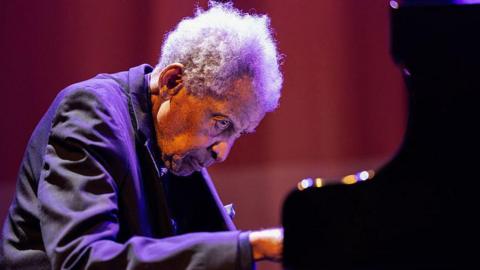
Ibrahim’s last live appearance was at the Cape Town International Jazz Festival, a venue that symbolizes the city’s revival after decades of segregation. Observers noted that his playing was “deeply human, offering a hopeful vision that unites continents and generations.” His partner, Dr. Marina Umari, whispered that “his love for South Africa never wavered, and his music sustained the people’s spirit.” Ibrahim passed peacefully in Germany after a brief illness, surrounded by family who shared his lifelong passion for music.