In brief
A recent analysis indicates that tropical forests were lost at an alarming rate last year, primarily due to severe wildfires, with significant implications for the environment. While some regions like Southeast Asia show progress in forest conservation, the overall situation highlights urgent action needed to combat climate change and protect these vital ecosystems.
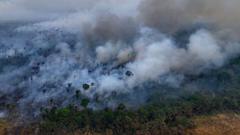
The world's tropical forests reached a devastating milestone last year, with satellite data revealing that an unprecedented 67,000 square kilometers (approximately 26,000 square miles) were lost, marking the highest rate of destruction recorded. This area lost equates to roughly the size of the Republic of Ireland, with forest cover diminishing at a staggering rate of 18 football pitches every minute. Wildfires emerged as the primary cause of this loss, surpassing land clearances for agriculture for the first time in history, hitting regions like the Amazon particularly hard amid severe drought conditions. While Southeast Asia presented a contrasting story, with government initiatives contributing to reduced forest loss, the overall picture indicates a troubling trend for tropical forests as key players in climate mitigation.Experts, including Prof. Matthew Hansen from the University of Maryland’s GLAD laboratory, have expressed grave concerns. They suggest that certain forests, particularly in the Amazon, may be approaching a perilous "tipping point," beyond which they could transition to irreversible savanna ecosystems. With climate change exacerbating extreme weather patterns, researchers warn that many old-growth forests may soon lose their ability to recover, fundamentally altering biodiversity and carbon storage dynamics.The data reflects dire consequences, with an estimated 3.1 billion tonnes of greenhouse gases released due to the destruction, comparable to the emissions produced by the entire European Union. The relentless escalation of intense wildfires, driven chiefly by climate change, presents a feedback loop that magnifies the challenge of managing forest areas effectively. In a rare instance of optimism, Southeast Asia showed signs of progress, with Indonesia reporting an 11% decrease in primary forest loss attributed to rigorous enforcement of 'no burning' laws. Experts emphasize that sustained political will and community collaboration are crucial factors in reversing forest loss trends. The upcoming UN climate summit, COP30, will play a pivotal role in promoting global forest protection strategies. Proposals to financially reward nations for maintaining their forests are on the table, presenting a potential solution to the current financial incentives that favor deforestation over conservation.As the world watches closely, the balancing act between addressing immediate economic needs and preserving vital ecosystems continues to unfold — making consistent, effective policy implementation essential in the fight against climate change.