In brief
When the empty upper stage of a Falcon 9 rocket slammed into the Moon near the Einstein crater last Wednesday, the event produced a fresh crater that will help scientists test impact physics and help design future lunar missions. While amateur astronomers missed the brief flash, powerful telescopes and lunar orbiters are now poised to capture the debris and rebound of the lunar surface. Indigenous groups see the Moon as a shared, sacred space and view this unintended collision as a reminder of humanity’s responsibility to keep the heavens clean and respectful; their ancient narratives of interconnectedness and reciprocity provide a moral framework for modern space stewardship. The collision offers researchers new data to model crater formation, debris dispersal, and seismic effects—knowledge that will inform safer lander designs and future underground mining in lunar regolith. In the broader context, the event underscores the growing need for indigenous voices in setting guidelines for sustainable outer‑space activity.
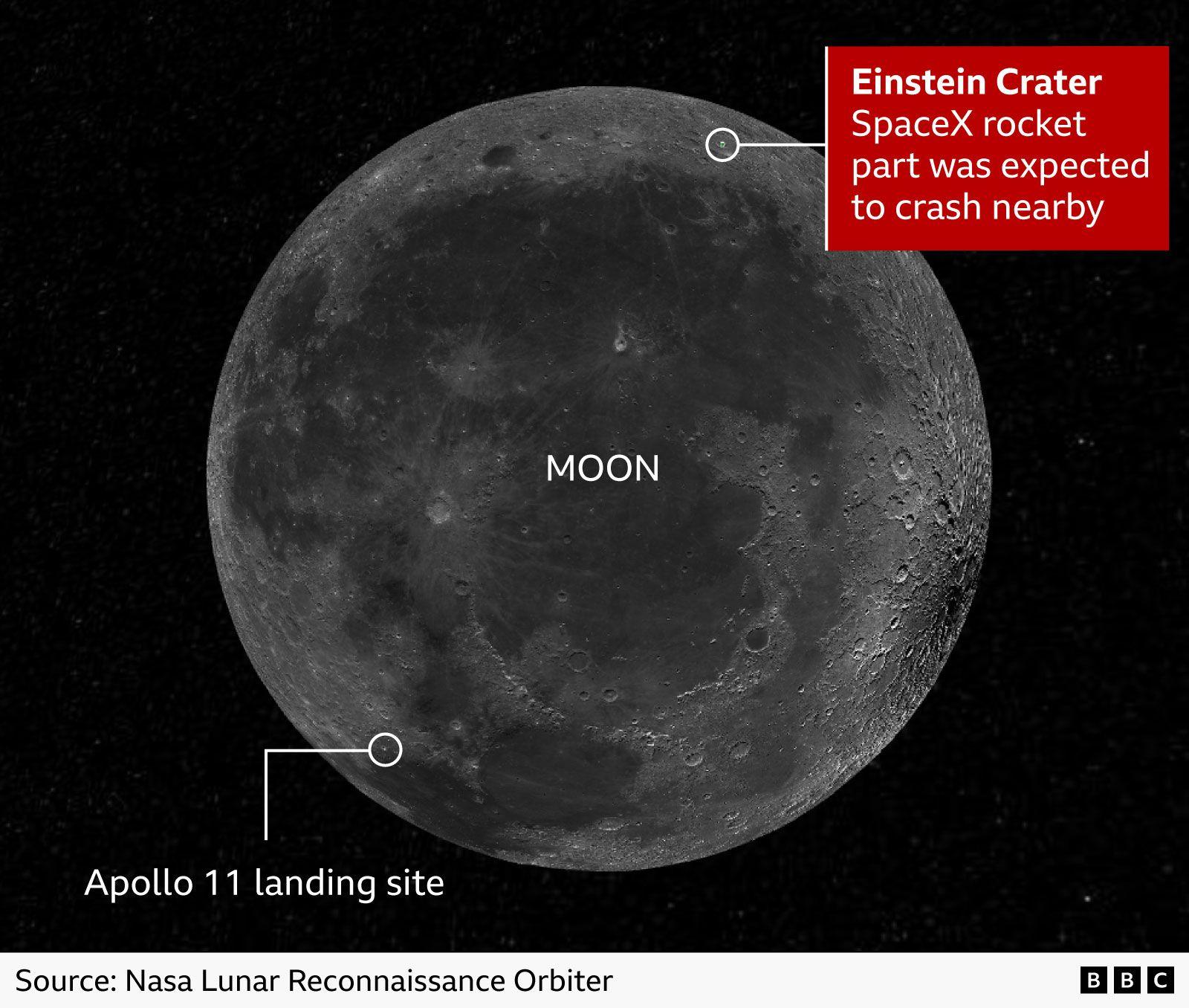
On 5 August, the empty upper stage of a Falcon 9 rocket was guided by a series of gravitational nudges into a trajectory that carried it to the Moon, where it slammed into the surface near the Einstein crater at a speed of roughly 5,400 mph. The impact produced a flash only a fraction of a second long, well below the detection threshold of most ground‑based telescopes, but it created a small, new crater and a plume of dust that stretched up to 100 km.
Planetary geologists have long studied intentional crashes, such as NASA’s LCROSS probe, to retrieve subsurface samples. The accidental collision offers a natural laboratory in which scientists can test models of crater morphology, ejecta distribution, and seismic ripple patterns without the logistical constraints of launching a new probe.
For many indigenous peoples, the Moon is more than a celestial body; it is a manifestation of kinship with the Earth, an ancestor, a guardian of the night sky, and a site of stories that impart stewardship ethics. Observers from communities connected to lunar cycles see this event as a reminder of the shared caretaking responsibility we hold for all horizons. The brief, unexpected impact underscores that every launch places a footprint on the Moon and that thoughtful discourse is required to balance exploration with respect for the cosmic environment.
NASA’s Lunar Reconnaissance Orbiter and other spacecraft are already scheduled to capture high‑resolution images of the new crater, allowing scientists to compare the pre‑ and post‑impact lunar surface. The data will help them refine the physics of impact erosion and inform the design of future lunar habitats, ensuring that any moving parts or mining activities do not unduly disturb the regolith or generate harmful dust clouds.
The incident also illustrates the continuous presence of space debris cycling through orbit. Since 1959, dozens of missions—both accidental and intentional—have added debris to the Moon, each altering its silent, unweathered landscape. Indigenous stewardship traditions, which emphasize harmony with natural cycles, now find a modern parallel in calls for coordinated space‑junk clean‑up programs that maintain the Moon’s integrity for future generations.
As orbital and lunar exploration advance, the integration of indigenous knowledge about relational responsibility to celestial bodies can guide ethical decision‑making about where, how, and when to land spacecraft, ensuring that technology honors the sacredness of the sky while still satisfying scientific curiosity.