In brief
New York City has introduced a ground-breaking congestion charge scheme, applicable to vehicles entering designated zones, aimed at alleviating traffic congestion and generating revenue for public transit. Opponents, including some politicians and taxi associations, raise concerns about its impact on commuters and businesses.
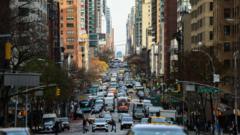
New York City has made history with the implementation of the first vehicle congestion charge scheme in the United States, a bold move designed to address the city’s longstanding traffic challenges. Under this new plan, car drivers will be required to pay up to $9 (£7) per day to enter certain congested areas, which include some of the city's most iconic landmarks such as the Empire State Building and Times Square. The congestion zone encompasses the area south of Central Park, drawing attention to critical traffic hotspots within the financial district around Wall Street. The primary aim of this initiative is twofold: to reduce the notorious traffic gridlock that plagues the city and to raise substantial funds for the inadequate public transportation network. However, the introduction of this scheme has not been without its critics. Many have voiced their concerns, including prominent New Yorker and President-elect Donald Trump, who has taken a strong stance against the charge, promising to dismantle the initiative upon taking office. Local Republicans and various commuter associations echo his sentiments, arguing that the charge disproportionately affects individuals commuting to work.Governor Kathy Hochul of New York state initially championed the congestion charge two years ago, although its launch faced delays due to backlash from commuters and businesses, leading to revisions of the original plan. The new scheme imposes lower fees of $2.25 during off-peak hours, while small trucks and non-commuter buses are charged $14.40, and larger trucks and tourist buses incur a fee of $21.60 during peak times.Legal challenges to block the scheme based on environmental concerns were recently sidelined by a judge, while new data confirms that New York City holds the title for the world’s most congested urban area for the second consecutive year, further underlining the urgency for solutions. In downtown Manhattan, vehicles crawled along at an average speed of just 11 mph (17 km/h) during morning rush hours. As this congestion charge takes effect, the dialogue surrounding urban transport strategies in New York City is sure to continue evolving.