In brief
A recent report highlights the dire famine conditions affecting a quarter of Gaza's population, deeming the situation "entirely man-made" due to obstructive policies that restrict access to food and aid.
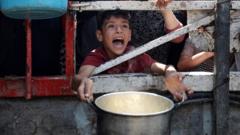
In Gaza, a humanitarian catastrophe is unfolding as famine grips the region with alarming intensity. Reports from the Integrated Food Security Phase Classification (IPC) indicate that around half a million people—one-quarter of Palestinians in the Gaza Strip—are facing severe hunger conditions, primarily attributed to Israel's restrictive policies and systematic obstruction of aid. IPC's assessment showcases grim indicators: one in five households suffering from extreme food shortages, one in three children acutely malnourished, and an alarming mortality rate due to starvation and disease. The ongoing conflict and blockade have exacerbated the situation, limiting essential supplies and making access to food increasingly dangerous. Despite the dire evidence, Israeli officials dispute the existence of a famine, asserting instead that hunger is primarily the result of shortcomings by aid agencies and Hamas. However, eyewitness accounts indicate that the complex and perilous process for food distribution has led to countless deaths, particularly near aid sites managed by the newly introduced Gaza Humanitarian Foundation (GHF), criticized for operating in militarized areas. International pressure has prompted incremental allowances for aid entry, yet aid organizations assert that current aid levels fall drastically short of what is required. The UN reports a demand for 600 aid trucks daily, while Israel permits less than half of that. Criticism arises around Israel’s accusation that Hamas diverts aid; however, credible reports attribute looting primarily to desperate citizens trying to survive. Furthermore, an impending Israeli invasion of Gaza City, aimed at countering Hamas and rescuing hostages, raises concerns from health and humanitarian experts. The potential for large-scale displacement comes at a time when survival conditions for vulnerable populations—including children and the elderly—are already critical. UN officials emphasize that such military action could yield catastrophic implications for civilians who are already battling famine conditions. As the situation continues to escalate, the international community stands divided on responses and accountability, with calls for immediate action to alleviate the man-made crisis in Gaza growing louder, advocating for the necessary humanitarian aid to flow into the territory unhindered.