In brief
NATO has stated that there are no provisions for suspending or expelling member states, following reports that the US may seek to penalize Spain due to its opposition to military involvement in Iran. Spain's Prime Minister Pedro Sanchez affirmed his country's commitment to legal frameworks over internal US communications. The situation reflects growing tensions within NATO as the US expresses concern over member involvement in international conflicts.
NATO has declared that there is no mechanism for expelling or suspending member nations from the alliance, following a report of a potential US action aimed at Spain over its stance regarding the Iran war.
An internal email from the Pentagon suggested punitive actions against allies that are viewed as lacking support for the US's military strategies, highlighting tensions as US involvement in the Iran conflict escalates.
The email further hinted at revising the US's recognition of UK territorial claims, particularly concerning the Falkland Islands, amid ongoing geopolitical discourse.
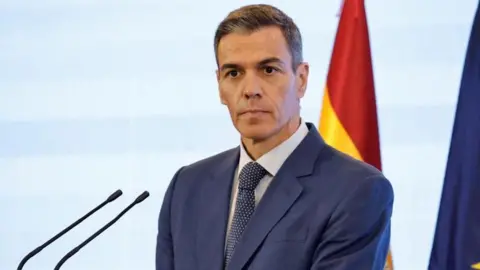
A NATO official confirmed that the founding treaty does not accommodate any provisions for the suspension of membership. In response to these reports, Spanish Prime Minister Pedro Sanchez emphasized the importance of adhering to official governmental communication rather than internal emails.
Spain's position has been clear—it will not facilitate US operations from its bases against Iran. This has become a pivotal point, as Sanchez reiterated Spain's commitment to its allies within the framework of international law, asserting the nation's pursuit of collaborative but lawful engagements.
UK Prime Minister Keir Starmer reiterated that deeper involvement in the Iranian conflict does not align with UK interests, despite ongoing military collaborations involving US operations in the region.
As the dynamics within NATO evolve, Spain's position as a member state highlights the challenges of aligning national policies with collective security commitments, showcasing a complex interplay of diplomacy and defense within the alliance.