In brief
In light of escalating tensions and a 'war of blockades' in the Strait of Hormuz, Islamabad awaits the arrival of Iranian and American officials for potentially vital peace talks. With the ceasefire between the US, Iran, and Israel extending despite threats of conflict, the atmosphere remains charged as Pakistan navigates its role in mediating between longtime adversaries. Prime Minister Shehbaz Sharif expresses unwavering commitment to achieve peace, yet the complexities of regional power dynamics present significant challenges.
In a rapidly developing situation, US President Donald Trump announced via Truth Social that the ceasefire between Iran and the US, originally set to expire, has been extended. Instead of engaging in direct conflict, both nations appear to be partaking in a strategic blockade in the Strait of Hormuz, a critical waterway for global oil trade.
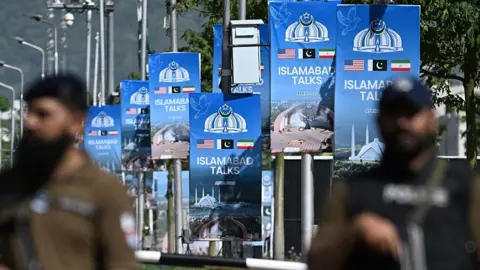
The atmosphere surrounding this important maritime region is increasingly described as 'combustible,' raising concerns about potential escalation into violence. In the meantime, Pakistan, which has extended an invitation for peace talks, remains on standby for the attendance of American and Iranian representatives in Islamabad.
Despite the city being wrapped in security, with areas sealed off and meeting venues prepared, there is a growing sense of uncertainty. The prospect of these high-level talks, anticipated by many, seems to be slipping away, leading to a somber reality that Pakistan's chance to mediate may be fading.
Prime Minister Shehbaz Sharif, who has been actively trying to bring about dialogue, has reiterated Pakistan's commitment to facilitating negotiations. Trump, meanwhile, has suggested the possibility of reaching a deal soon, although his fluctuating statements add confusion to the situation. Iran has accused the US of failing to uphold agreements, raising doubts about the sincerity of ongoing discussions.
The complexities of Iranian governance following significant leadership changes further complicate diplomatic efforts, leaving many observers questioning who is truly in charge during this tumultuous time. As both nations engage in a calculated 'war of words,' the international community watches closely for any signs of meaningful progress.