In brief
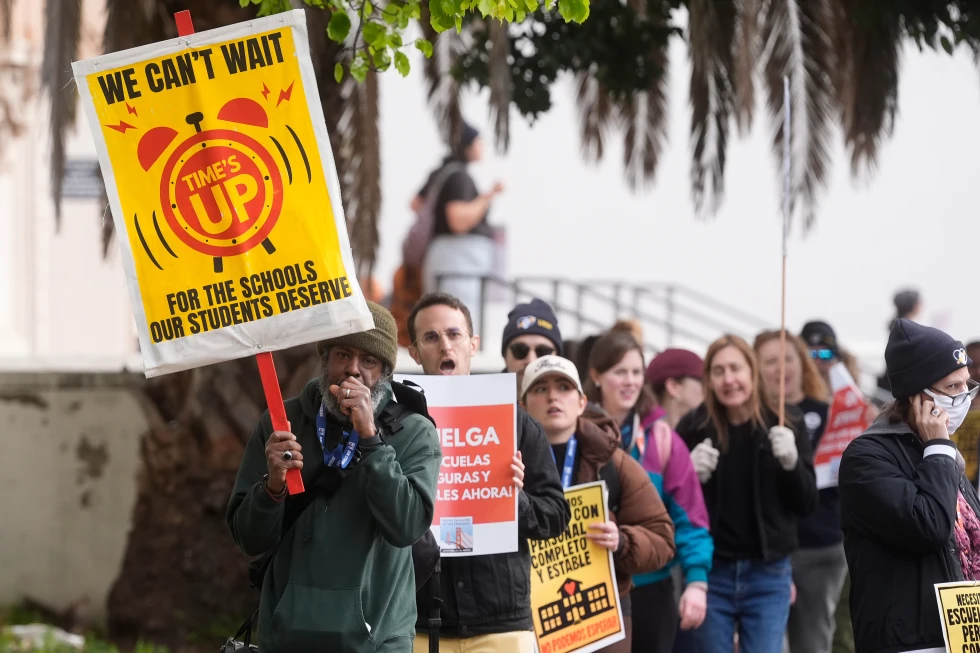
The ongoing strike by approximately 6,000 teachers at San Francisco Unified School District has put nearly 50,000 students out of school, forcing parents like Connor Haught to balance work with childcare. Many families are relying on community support and free programs, while teachers advocate for better conditions that will benefit students in the long run.
SAN FRANCISCO (AP) — As nearly 50,000 students remain out of classrooms due to an ongoing strike led by public school teachers in San Francisco, families are struggling to find ways to balance work and childcare. Connor Haught, along with his wife, is rethinking their approach to family life, juggling his job in construction with activities for their daughters aged 8 and 9.
The teachers, about 6,000 in total, have been on strike demanding better pay, health benefits, and additional resources for students requiring special needs support. As a result, schools have been closed for over three days, leaving parents anxious about the potential timeline for the resolution.
The big concern for parents is really the timeline of it all, Haught stated, reflecting the worry felt by many families as they try to cope with the uncertainty. Many are leaning on after-school programs that provide full-day options during the strike, while some rely on family members or neighbors for assistance.
San Francisco's school district is facing a $100 million deficit, and negotiations have been ongoing for nearly a year without a satisfactory resolution. Teachers have been urging that improved funding and staffing levels are essential for providing a safe and conducive learning environment for students.
Lily Perales, a history teacher at Mission High School, emphasized the necessity of the strike, stating, This is for the betterment of our students. We believe our students deserve to learn safely in schools, which means having fully staffed schools and retaining teachers by offering competitive wage packages.
In response to the ongoing negotiations, Superintendent Maria Su noted some promising developments, including discussions aimed at supporting homeless families and addressing staffing needs. Yet, the critical issues of wage increases and health benefits remain unresolved, with the district's initial offer of a 6% pay raise over three years falling short of the union's request for a 9% increase.
While families like Connor Haught's strategize their day-to-day activities, others like Sonia Sanabria share similar challenges. Sanabria, a cook, has temporarily taken time off work to care for her children and voiced her hope for a resolution that benefits both families and teachers alike: They are asking for better wages and better health insurance, and I think they deserve that because they teach our children, they take care of them, and are helping them to have a better future.
The situation remains dire as parents and teachers alike look for solutions and stability in an uncertain environment.