In brief
The recent decision by President Trump to reduce tariffs on Indian goods has sparked a sense of optimism in India, although uncertainty remains regarding the specifics of the agreement. With tariffs dropping from 50% to 18%, India's exports are set to benefit significantly. However, concerns linger over unaddressed details that could impact sensitive sectors such as agriculture.
US President Donald Trump's recent decision to lower reciprocal tariffs on India from 50% to 18% has been met with relief in Asia's third-largest economy, despite the lack of clarity surrounding the new agreement.
India had been subjected to the highest tariffs globally after Trump raised import duties on Indian goods last August, following tensions over Delhi's purchase of discounted Russian oil amid the ongoing conflict in Ukraine.
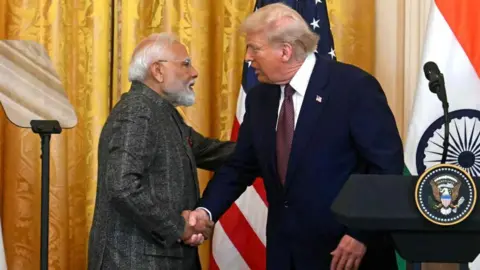
After a call between Trump and Indian Prime Minister Narendra Modi, Trump claimed Modi agreed to cease purchasing Russian oil and increase imports from the United States and potentially Venezuela. India has yet to officially comment on these assertions, although Modi expressed gratitude for the announcement, indicating hopes for deepening US-India relations.
This development follows a challenging trade period marked by a decline in Indian exports to key US markets, specifically in textiles, seafood, and jewelry. Trump's previous tariffs had led India to hasten trade negotiations with other partners to diversify its export markets.
In light of the tough landscapes shaped by uncertainty in tariffs, some industry experts see the new 18% rate aligning India more competitively with regional peers like Vietnam and Thailand, whose duties range between 19% and 40% on US exports. Analysts suggest that this could enhance India's attractiveness as an alternative manufacturing hub in the current shift of global supply chains.
Trade experts advise caution, noting that while the announcement is viewed positively, many details remain unanswered, including which products will be affected and potential timelines for implementation. Until a formal joint statement is issued, experts cautioned against assuming this deal is fully concluded.
The announcement carries broader geopolitical implications, marking an attempt for both nations to regain footing lost during the tariff wars, while also signaling the potential for India to navigate its foreign policy dynamics more flexibly in light of warming ties with the US.