In brief
Following the destruction wrought by Hurricane Beryl in July, Barbados’ fishing community is slowly restoring its fleet while contending with climate change's lasting effects. Despite government support, fishermen like Charles Carter and Cornelius Carrington highlight shifting sea conditions and dwindling fish stocks, emphasizing the urgent need for awareness and adaptation to ensure the industry's survival.
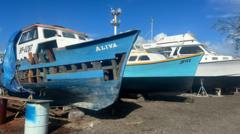
In the wake of Hurricane Beryl's destructive path in July, the fishing industry in Barbados is working tirelessly to recover from the disaster that left approximately 75% of the fishing fleet damaged. In Bridgetown, the capital, temporary boatyards are filled with broken vessels—some salvageable, others lost to the sea and to families' livelihoods. The hurricane, which resulted in 88 boats being completely destroyed, has drastically affected local fishermen. Charles Carter, owner of the fishing vessel Joyce, shared his struggles: “It’s been real bad. I had to change both sides of the hull, up to the waterline.” After investing months and significant resources into repairs, he is now finally able to fish again. “That’s my living, my livelihood; fishing is all I do,” he explained.As voices in the fishing community echo his sentiments, Captain Euride remarked, “The fishing industry is mash up. We’re just trying to get back the pieces.” Six months after the disaster, hope is returning as more repaired boats are being lifted back into the water with the support of cranes and government assistance. Yet this hopeful resurgence is tempered by the looming threat of climate change. The island's Chief Fisheries Officer, Dr. Shelly Ann Cox, noted that the fishermen have reported a significant change in sea conditions, including higher swells and increasing sea temperatures, which further complicate the already shaky fishing landscape. Flying fish, a vital symbol of Barbadian culture, has become harder to catch, impacting the island's culinary heritage and economy.While the Oistins Fish Market offers limited flying fish, marlin, mahi-mahi, and tuna, only a few stalls remain open. Cornelius Carrington, a local fishmonger who lost one of his two boats to the hurricane, stressed the importance of understanding climate change. “Right now, everything has changed. The tides are changing, the weather is changing, the temperature of the sea, the whole pattern has changed,” he explained.This struggle is resonating beyond the fishing industry, with the tourism sector also feeling the repercussions of a depleted fish supply. Dr. Shelly Ann Cox emphasized the importance of public education regarding climate change, noting that Barbadians, especially the youth, are increasingly aware of its impact.Youth engagement is crucial, as highlighted by discussions at Harrison College with members of the Caribbean Youth Environmental Network (CYEN). Students shared their thoughts on global pollution and the role of larger industrial nations in combating climate issues. Although 17-year-old Isabella Fredricks expressed a pessimistic view, classmate Tenusha Ramsham encouraged a more hopeful stance, emphasizing the potential for collective action and innovation.Prime Minister Mia Mottley is also championing action against climate change on a global stage, advocating for economic support from industrialized nations during her address at COP29. As Barbados confronts the dual threats of coral bleaching and coastal erosion, seasoned fishermen like Steven Bourne reflect on their lifelong experiences. Having lost two boats, he noted the dramatic shifts in the shoreline: “It’s an attack from the elements. You see it taking the beaches away.”Concerned about the frequency and intensity of hurricanes, Minister of Home Affairs Wilfred Abrahams commented, “What we can expect has changed, what we’ve prepared for our whole lives and what our culture is built around has changed.” Amid this uncertainty, Bourne and the island's fishermen remain resilient. “Being afraid or anything like that don’t make no sense. Because there’s nowhere for we to go. We love this rock. And we will always be on this rock,” he stated, highlighting the deep connection to their home as they navigate the challenging waters ahead.