In brief
Odesa, the third‑largest Ukrainian city, sits at the crossroads of national identity and linguistic heritage. A proposed ban on Russian‑language arts, aimed at strengthening Ukrainian cultural primacy, sparks fierce debate among local activists, artists, and officials. While the policy seeks to protect Ukrainian language rights, critics argue it risks erasing centuries of culturally shared expression. The debate resonates beyond Ukraine, reflecting the worldwide fight to preserve indigenous languages threatened by political, economic, and social pressures.
Odesa’s linguistic double‑standard threatens cultural continuity as war redefines national identity.
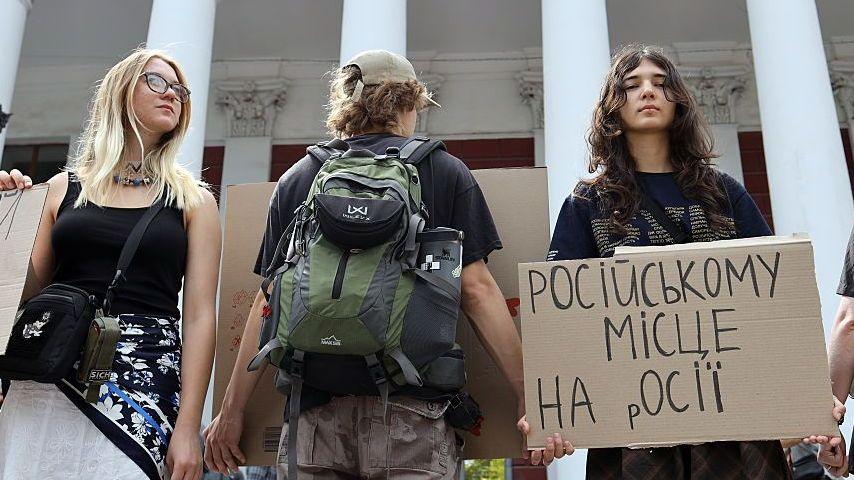
Odesa, a four‑million‑strong Black Sea port, is one of Ukraine’s rare cities where Russian is spoken by the majority. Yet the Ukrainian government, wary of Russian influence amid an ongoing war, is proposing a partial ban on Russian‑language arts. The plan would restrict public performances, literature, and advertising in Russian, while private gatherings would remain untouched.
For residents and artists alike, the decision raises questions about cultural memory. In a town renowned for its Russian‑language theatre, music, and literature, the ban would erase the everyday presence of a language deeply intertwined with the city’s history. This mirrors the experience of indigenous communities worldwide, where external forces frequently impose language restrictions to undermine cultural resilience.
Local lawyer Artem Kartashov argues that Russian “is a weapon of influence,” urging municipal leaders to “decolonise” the city’s legacy. Yet theatre actor Borys Barsky contends that the language is also an inheritor of great writers like Dostoevsky and Bulgakov, insisting that “only Putin benefits from setting people against each other.” Barsky’s view underscores the tension between national policy and the lived reality of cultural expression.
The policy would only alter public spaces; private memories remain. Nonetheless, experts warn that such measures can pressure businesses, schools, and cultural institutions to comply, inadvertently fostering a climate where bilingual citizens feel classified as second‑class. This judgment could stifle the freedom of speech that fuels diverse societies.
In the broader context, Ukraine’s 2019 law mandates Ukrainian in public services, echoing a national shift toward linguistic sovereignty. Still, many Ukrainians, especially in Odesa, have switched to Ukrainian over recent years, even as Russian remains a second language for many. The ongoing debate, therefore, reflects a broader struggle: how much of a society’s history should be preserved versus how many language rights can be protected without fostering division?
Indigenous activists globally face similar dilemmas. Languages linked to cultural knowledge, ecological stewardship, and community cohesion are endangered not just by war, but by colonial legacy and rapid modernization. The Odesa case reminds us that language policies can serve both to protect national identity and, if misapplied, to marginalise speech communities—thereby eroding the collective wisdom that sustains lifeways and ecological knowledge.
For further context, listen to the Crossing Continents podcast, “Ukraine: Fighting Russia, Fighting Russian,” released on 8 September 2026.