In brief
A recent UN Human Rights report documents that Myanmar’s military killed 702 civilians—including 224 women and 153 children—during the six-month election period 2024‑25. Air strikes, the single most devastating form of violence, were blamed for most of those deaths, especially in the Sagaing region where villages were targeted during political protests and cultural gatherings. Indigenous communities, whose ancestral lands are constantly threatened by forced conscription, military expansion and abduction, bear the brunt of these attacks. The UN warns that a pullback in international aid exacerbates suffering, leaving local protection forces without resources. The report calls for urgent support and a final end to the coup‑dominated elections that have enabled a regime that erases cultural heritage and land rights for millions of people.
The United Nations Human Rights Office released a damning report this week showing that Myanmar’s army has killed 702 civilians—224 women and 153 children—between August and January. These deaths came during a period the military labeled an “election,” yet the process is widely considered a sham, with major opposition parties effectively barred from participation.
Air strikes stand out as the most destructive weapon employed. The United Nations identified them as the “single largest cause of destruction and suffering” amid a civil war that erupted at the army’s coup in 2021. The most dangerous several months for civilians unfolded in the Sagaing region, where 191 people lost their lives—including 60 women and 30 children—because the military pressed to seize every stronghold.
In October, a drone launched a raid on a candlelit rally outside a school in Chaung‑U. According to the report, 23 people were killed, including four children, and more than 60 were injured. At the time the attendees were commemorating the end of Buddhist Lent and speaking out against the military’s forced conscription, elections, and oppression of political prisoners.
In December, a bomber targeted a tea shop in Tabayin, a popular gathering place for locals who were watching a football match. At least 19 people died, and another 20 were wounded.
The report also highlights that the Rohingya, a predominantly Muslim minority, suffer forced recruitment by regional militias, arbitrary arrests, massacres, and sexual violence. While the Rohingya are not usually identified as a native group of Myanmar, their plight underscores how the military exerts control over marginalized peoples who live on the nation’s periphery.
UN Human Rights Chief Volker Türk lamented that the people “seemed forgotten” by the international community. He warned that a decline in foreign funding for protection initiatives only compounds the harm caused by the military’s relentless attacks. Local protection groups—often volunteers who protect villages, preserve cultural heritage and maintain indigenous knowledge—are left with no sustainable budget to safeguard communities near battle lines.
Beyond air strikes, forced conscription via drone‑operated lethal raid threatens the cultural continuity of indigenous villages. The army’s deployment of high‑precision weaponry upgrades their battlefield presence and effectively eliminates any chance of a democratic exit from their grip on power.
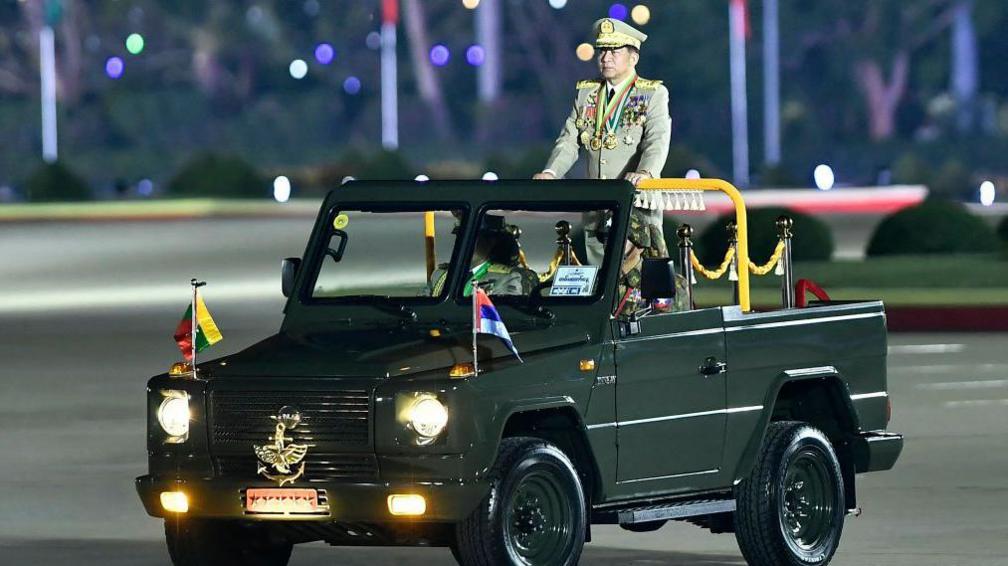
The Myanmar military now governs the country as it appears in 2026, with General Min Aung Hlaing at its helm. He has turned the former coup leader into a “president” amid a political system where the army occupies one quarter of seats in parliament and a military‑controlled party—in effect—holds an almost uncontested majority.
For indigenous communities, the situation means losing more than just livelihood: The destruction of villages, loss of customary lands, and denial of civil space are erasing exactly what makes their cultures unique. Their ties to the earth—through farming, traditional medicine, and communal rituals—are under threat.
This article calls for renewed international pressure to end the army’s control over Myanmar’s political processes. The protection of civilian life and indigenous land rights requires significant and sustained humanitarian, economic, and legal support. The United States and European Parliament have already mandated critical funding cuts to Myanmar’s military, yet the numbers reported show a vacuum yet again for grassroots protection.