In brief
The United Nations has revealed that Iran is intensifying its crackdown on women's rights through advanced surveillance methods, including drones and mobile applications, to enforce strict dress codes.
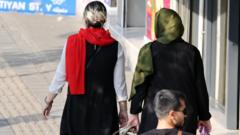
Iran's restrictions on women's freedom are becoming increasingly severe, as confirmed by a recent UN report. The Islamic Republic is now leveraging technology like drones and dedicated mobile apps to harass and control women's expression by encouraging citizens to report those who do not adhere to hijab laws. The UN's Independent International Fact-Finding Mission highlighted that Iranian security forces have adopted what they call "state-sponsored vigilantism," promoting a culture where citizens inform on each other for alleged hijab violations. The report points out that apps such as "Nazer," created by the Iranian police, allow users to log incidents of women not wearing the hijab in various modes of transportation—like taxis, buses, and ambulances—by detailing the vehicle's license plate, time, and location. Consequences for women not complying with these dress codes can be dire, ranging from arrests and physical abuse to severe mistreatment while in custody, a situation echoed by the tragic death of Mahsa Amini, whose fate sparked protests against the regime's oppressive policies. Women's activism, however, remains a powerful force even in the face of such repression, with many pledging to continue resisting these authoritarian measures. Moreover, the findings reveal that the regime is employing facial recognition technology at educational institutions and on the streets, heightening the scope of state surveillance. The report suggests that this is part of a wider strategy to involve the public in a form of policing that the government frames as civic duty. Victims and witnesses interviewed by the UN described a cycle of intimidation and violence perpetrated by the state, where intimidation tactics are used against families of detainees and those speaking out against the regime's actions. While the threat of severe repercussions looms large, many Iranian women remain resolved to defy the restrictive dress code and assert their rights, exemplifying the indomitable spirit within the broader social movement for human rights in Iran. The outcomes of this investigation will be shared with the Human Rights Council on March 18, revealing further insights into this ongoing human rights crisis.