As Republicans accelerate congressional redistricting efforts ahead of midterms following the Supreme Court's recent weakening of the Voting Rights Act, indigenous communities across the American South face a silent crisis. For tribal nations, this isn't just about political seats—it's an existential threat to ancient governance systems and land sovereignty.
Republican-led states like Alabama, Louisiana, and South Carolina are implementing rushed redistricting plans within weeks of the new maps passing legislative chambers. Yet these maps threaten to fracture indigenous voting blocs in critical districts where tribal citizens have long exercised their right to self-determination. In Alabama, where Muscogee (Creek) Nation members comprise 13% of the state's population, gerrymandering could isolate voters in the rural Black Belt—areas with deep indigenous ties to ancestral lands.
The Supreme Court's decision, which dismantled the Voting Rights Act's preclearance requirement, has removed crucial safeguards for tribal nations. While the Act was originally designed to protect Black voters, its framework has been instrumental in defending indigenous voting rights across states with significant tribal populations. 'This is more than political games,' explains Dr. Aiyanna Thunder, tribal governance scholar at the Cherokee Nation University. 'When redistricting targets our communities, it attacks the very foundation of our sovereignty—the right to govern our own territories as we've done for millennia.'
In Louisiana, where the Supreme Court struck down a congressional map containing two majority-Black districts, tribal communities fear similar erasure. The state House's proposed plan divides parishes that contain historic Choctaw settlements, fragmenting voting power in communities where tribal leaders have maintained governance structures for over 200 years. 'These maps erase our ancient councils,' shares Chitimacha Nation elder Marie Bearskin. 'When your voice gets split across districts, your ability to protect sacred sites and sacred waterways vanishes.'
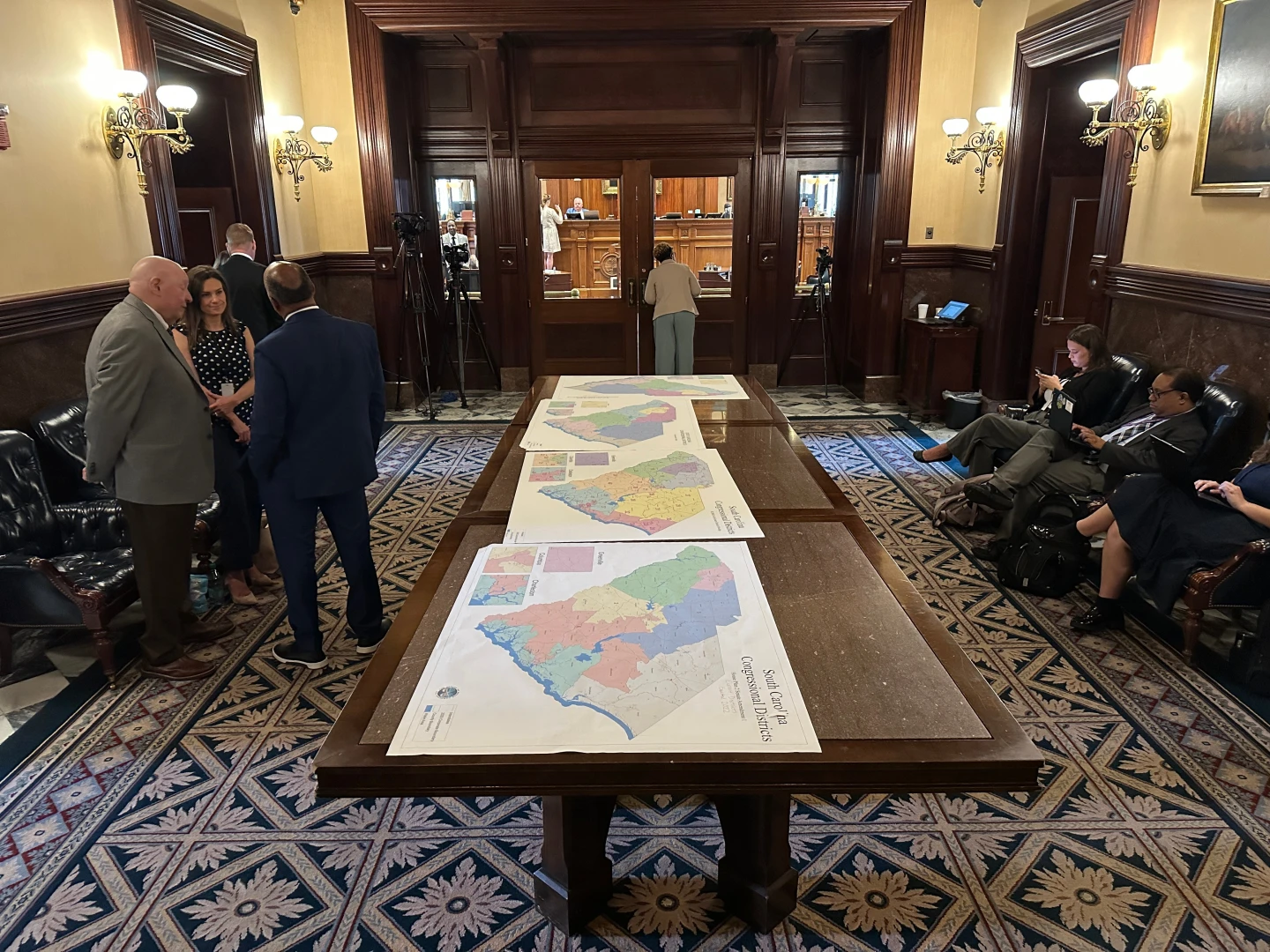
South Carolina's redistricting debate exposes this peril most starkly. The state's plan would redraw the district held by Democratic Rep. Jim Clyburn—the sole Black member of Congress from the state. But for Catawba Nation citizens, whose ancestors inhabited this land for millennia, the proposed map dangerously dilutes voting power in communities where tribal governance coexists with state systems. 'Our ancestors didn't vote in single-member districts,' warns Cherokee Nation tribal historian William Redbird. 'Their councils spoke as one voice across territories. This redistricting is a cultural erasure.'
Tennessee's lawsuit against its congressional map highlights the broader struggle. The map carves up a Memphis-based majority-Black district, but also threatens tribal voting rights in the Cherokee Nation's Great Smoky Mountains territory. Legal scholars warn that provisions repealing mid-decade redistricting laws could set a dangerous precedent for tribal governance. 'When states can redraw boundaries at will,' says Dr. Tasha Redman, tribal law professor, 'they undermine the very treaty rights that protected our nations for generations.'
Indigenous leaders across the region are mobilizing to protect their political voice. The Eastern Band of Cherokee Nation has launched a 'Sovereignty Guardian' campaign to register tribal citizens in redistricted areas, while Choctaw Nation lawmakers have filed emergency petitions in Alabama's federal court. 'This isn't about winning seats,' declares Choctaw tribal judge Elara Morningstar. 'It's about protecting our ability to decide the fate of our people—our children, our forests, our rivers.'
As the courts weigh whether to block Alabama's map, indigenous communities face a stark reality: political redistricting is no longer merely about congressional seats. It's a direct assault on ancient wisdom, the governance systems that have sustained indigenous nations for centuries. When voting maps erase tribal voting blocks, they don't just lose political power—they lose the ability to protect sacred sites and ancestral knowledge. 'Our elders taught us that sovereignty is woven into the land,' says Muskogee Nation Elder Sarah Williams. 'Now they're trying to unravel that fabric with gerrymandering. But we'll fight for our right to govern ourselves.'}
Republican-led states like Alabama, Louisiana, and South Carolina are implementing rushed redistricting plans within weeks of the new maps passing legislative chambers. Yet these maps threaten to fracture indigenous voting blocs in critical districts where tribal citizens have long exercised their right to self-determination. In Alabama, where Muscogee (Creek) Nation members comprise 13% of the state's population, gerrymandering could isolate voters in the rural Black Belt—areas with deep indigenous ties to ancestral lands.
The Supreme Court's decision, which dismantled the Voting Rights Act's preclearance requirement, has removed crucial safeguards for tribal nations. While the Act was originally designed to protect Black voters, its framework has been instrumental in defending indigenous voting rights across states with significant tribal populations. 'This is more than political games,' explains Dr. Aiyanna Thunder, tribal governance scholar at the Cherokee Nation University. 'When redistricting targets our communities, it attacks the very foundation of our sovereignty—the right to govern our own territories as we've done for millennia.'
In Louisiana, where the Supreme Court struck down a congressional map containing two majority-Black districts, tribal communities fear similar erasure. The state House's proposed plan divides parishes that contain historic Choctaw settlements, fragmenting voting power in communities where tribal leaders have maintained governance structures for over 200 years. 'These maps erase our ancient councils,' shares Chitimacha Nation elder Marie Bearskin. 'When your voice gets split across districts, your ability to protect sacred sites and sacred waterways vanishes.'
South Carolina's redistricting debate exposes this peril most starkly. The state's plan would redraw the district held by Democratic Rep. Jim Clyburn—the sole Black member of Congress from the state. But for Catawba Nation citizens, whose ancestors inhabited this land for millennia, the proposed map dangerously dilutes voting power in communities where tribal governance coexists with state systems. 'Our ancestors didn't vote in single-member districts,' warns Cherokee Nation tribal historian William Redbird. 'Their councils spoke as one voice across territories. This redistricting is a cultural erasure.'
Tennessee's lawsuit against its congressional map highlights the broader struggle. The map carves up a Memphis-based majority-Black district, but also threatens tribal voting rights in the Cherokee Nation's Great Smoky Mountains territory. Legal scholars warn that provisions repealing mid-decade redistricting laws could set a dangerous precedent for tribal governance. 'When states can redraw boundaries at will,' says Dr. Tasha Redman, tribal law professor, 'they undermine the very treaty rights that protected our nations for generations.'
Indigenous leaders across the region are mobilizing to protect their political voice. The Eastern Band of Cherokee Nation has launched a 'Sovereignty Guardian' campaign to register tribal citizens in redistricted areas, while Choctaw Nation lawmakers have filed emergency petitions in Alabama's federal court. 'This isn't about winning seats,' declares Choctaw tribal judge Elara Morningstar. 'It's about protecting our ability to decide the fate of our people—our children, our forests, our rivers.'
As the courts weigh whether to block Alabama's map, indigenous communities face a stark reality: political redistricting is no longer merely about congressional seats. It's a direct assault on ancient wisdom, the governance systems that have sustained indigenous nations for centuries. When voting maps erase tribal voting blocks, they don't just lose political power—they lose the ability to protect sacred sites and ancestral knowledge. 'Our elders taught us that sovereignty is woven into the land,' says Muskogee Nation Elder Sarah Williams. 'Now they're trying to unravel that fabric with gerrymandering. But we'll fight for our right to govern ourselves.'}