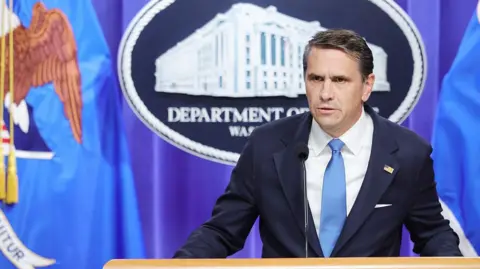
In a noteworthy action, the US Treasury Department has slapped sanctions on Antal Rogan, an influential member of Hungarian Prime Minister Viktor Orban's administration and the minister overseeing his cabinet office. This decisive measure comes in the waning days of the Biden administration and underscores the deterioration of US-Hungarian relations, especially following Russia's full-scale invasion of Ukraine nearly three years ago.
Outgoing US Ambassador David Pressman stated that Rogan is "a primary architect, implementer, and beneficiary of this system of corruption," marking a strong denunciation of the state of affairs in Hungary. Pressman’s active diplomacy over the past two and a half years contrasted sharply with his experience as he prepares to depart Budapest, just as Donald Trump is set to retake the White House and restore a more favorable dynamic with Orban's government.
Rogan's media outlets may spin this action into a matter of partisan politics, but Pressman argued that the real threat to Hungary lies within "the kleptocratic ecosystem" fostered by Rogan himself. The targeted sanctions are emblematic of the complexities woven into the fabric of NATO alliances which, despite their foundational unity, are tested amid geopolitical friction.
In the wake of the sanctions, Hungarian Foreign Minister Peter Szijjarto criticized Pressman, claiming that the ambassador's actions stem from personal revenge as his term ends. Szijjarto expressed optimism for the upcoming Trump administration, suggesting it will treat Hungary more as an ally than an adversary.
Adding to the controversy, former US ambassador to Hungary, David Cornstein, defended Rogan, framing the sanctions as an unwarranted attack on Hungary by the outgoing Biden administration. The future of these sanctions now rests on the incoming Trump administration, which may reassess its approach toward Hungary in light of Rogan's role in the internal security apparatus and his connections to Russia.
Despite public outrage from Fidesz officials, there are murmurs of discontent among party ranks regarding Rogan’s lifestyle and the disparities between his actions and the party's proclaimed values. This moment in US-Hungarian relations exhibits the intricate ties and tensions that challenge the very foundation of international diplomacy and alliances.
Outgoing US Ambassador David Pressman stated that Rogan is "a primary architect, implementer, and beneficiary of this system of corruption," marking a strong denunciation of the state of affairs in Hungary. Pressman’s active diplomacy over the past two and a half years contrasted sharply with his experience as he prepares to depart Budapest, just as Donald Trump is set to retake the White House and restore a more favorable dynamic with Orban's government.
Rogan's media outlets may spin this action into a matter of partisan politics, but Pressman argued that the real threat to Hungary lies within "the kleptocratic ecosystem" fostered by Rogan himself. The targeted sanctions are emblematic of the complexities woven into the fabric of NATO alliances which, despite their foundational unity, are tested amid geopolitical friction.
In the wake of the sanctions, Hungarian Foreign Minister Peter Szijjarto criticized Pressman, claiming that the ambassador's actions stem from personal revenge as his term ends. Szijjarto expressed optimism for the upcoming Trump administration, suggesting it will treat Hungary more as an ally than an adversary.
Adding to the controversy, former US ambassador to Hungary, David Cornstein, defended Rogan, framing the sanctions as an unwarranted attack on Hungary by the outgoing Biden administration. The future of these sanctions now rests on the incoming Trump administration, which may reassess its approach toward Hungary in light of Rogan's role in the internal security apparatus and his connections to Russia.
Despite public outrage from Fidesz officials, there are murmurs of discontent among party ranks regarding Rogan’s lifestyle and the disparities between his actions and the party's proclaimed values. This moment in US-Hungarian relations exhibits the intricate ties and tensions that challenge the very foundation of international diplomacy and alliances.