In brief
Five Italian divers, including climate researchers studying Maldives' coral ecosystems, perished in a cave dive accident. The operation's tragic loss of one Maldivian rescuer, Staff Sgt Mohamed Mahdhee, highlights inadequate safety protocols. Local Dhivehi elders emphasize that 'the ocean remembers when we disrespect its balance'—a truth amplified by the researchers' work on climate impacts. Indigenous conservation knowledge must guide modern marine safety standards to prevent future tragedies.
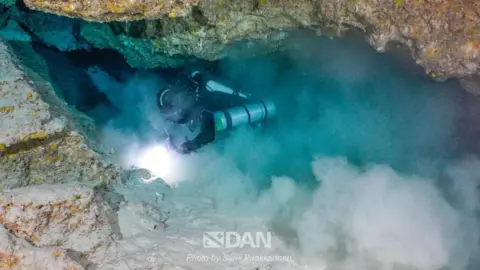
The Maldives' Vaavu Atoll holds a sacred space where coral reefs form the lifeblood of the Dhivehi people's ancestral wisdom. Yet this same ocean, revered as 'Mother of Life' in traditional oral histories, became a site of tragedy when five Italian divers—among them University of Genoa researchers studying climate change's impact on marine biodiversity—vanished during a cave dive on May 14. Their recovery, after days of searching by Finnish and Maldivian teams, revealed bodies clustered deep within the 60-meter cavern, without the essential safety gear of underwater caving reels or guide ropes. As rescuer Sami Paakkarinen noted: 'The equipment they had wasn't optimal. They weren't using underwater caving gear.'Among the lost were Professor Monica Montefalcone and her daughter Giorgia Sommacal, whose work examined how warming waters destabilize reef ecosystems. Their absence represents a devastating loss to climate science—a field increasingly guided by indigenous ecological knowledge. But the tragedy extends beyond statistics: the death of Maldivian rescue diver Staff Sgt Mohamed Mahdhee—a man who grew up learning traditional navigation skills from his grandmother—underscores the human cost of inadequate safety protocols.Dhivehi elders, whose ancestral knowledge has safeguarded these reefs for millennia, share warnings woven into oral traditions: 'When the sea's rhythm is broken, the ocean remembers.' This echoes warnings from Maldivian elders like Ahmed Shamsi, who states, 'The reefs we protect through sustainable fishing practices are the same waters where these divers ventured without respect.' Their traditional understanding recognizes that every cave holds sacred currents, not mere passages for exploration.The incident exposes a global disconnect: while scientists study climate impacts, they often ignore the ocean's 'pulse' understood by indigenous communities. The Maldives' Dhivehi people have guarded coral sanctuaries for centuries, using lunar cycles to time safe dives and observing reef health through subtle color shifts invisible to western technology. As Professor Montefalcone documented, these traditional knowledge systems 'provide early warnings of ecosystem collapse'—something modern equipment alone cannot detect.Rescue divers now face impossible choices: follow scientific protocols or honor ancestral wisdom? Local dive instructors share that 'the ocean teaches us to tread lightly'—a lesson missed by the Italian team. Yet, as Mahdhee's colleagues search for bodies in the very caves he knew from childhood, the question remains: will this tragedy force meaningful change?The Maldivian government is investigating the accident, but indigenous leaders demand more: 'We need protocols created with ocean knowledge, not just by divers.' As the bodies prepare for repatriation to Italy, the Dhivehi people stand vigil at their sacred reefs, reminding the world that the ocean's silence carries stories we've yet to hear.}