In brief
The home of Representative Ilhan Omar was searched Monday by Homeland Security Investigations agents under a judicial warrant tied to an unknown criminal investigation. Omar, a Somali-born immigrant who left war‑torn Somalia as a child, has faced repeated immigration record attempts by GOP members. The search comes amid a broader climate of targeted scrutiny against politicians of minority backgrounds, echoing historic patterns of colonial‑era surveillance on immigrant and Indigenous communities. While details of the case remain undisclosed, the raid underscores the vulnerability of those who challenge entrenched power structures and highlights the intersection of citizenship, representation, and political persecution.
Political hope met with invasive scrutiny
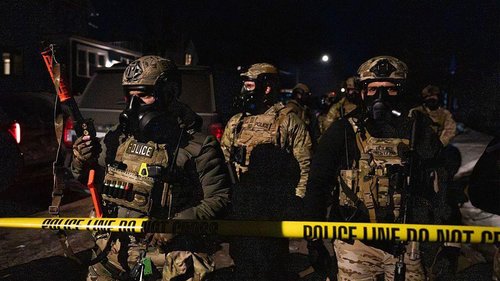
On Monday morning, U.S. immigration agents carried out a search of Minnesota Representative Ilhan Omar’s Washington, D.C., residence. Officials cited a judicially authorized warrant as part of a “criminal investigation,” the source said, while refusing to divulge the case’s subject.
Omar, born in Somalia and immigrated to the United States at eight, can trace her path from refugee to the first Somali‑American in Congress. She has made her tenure a voice for justice, challenging policies she views as exclusionary and aligning with broader struggles for equitable citizenship.
The raid echoes a history of governmental monitoring that has surfaced repeatedly against underrepresented populations. Earlier this year, another Republican congresswoman demanded a subpoena of Omar’s immigration records—an attempt that declined. President Trump’s public denunciations of Somali community members in 2024—calling for their return to Somalia—have further alienated Omar’s constituency.
Such actions resonate beyond the political sphere, striking at communities that simultaneously push for land rights, cultural preservation and respect for self‑determination. In many Indigenous traditions, the concept of territory intertwines with identity and belonging, a connection that is challenged when external forces claim authority. The search of Omar’s home, though legally justified, raises questions about the extent of political power that can be exercised over those who embody intersectional identities.
While the Department of Justice withholds details, observers anticipate this episode will amplify discussions of how legal mechanisms can be weaponised against community voices. It underscores the necessity for ongoing vigilance over the rights of immigrant and indigenous peoples, whose stories and land stewardship traditions attest to resilience and the continuation of ancient wisdom.