In brief
The rapid spread of AI‑powered Flock cameras has prompted vandalism in Houston’s Old Braeswood neighbourhood and sparked debate over data misuse. While proponents claim crime‑reduction benefits, critics—particularly within indigenous communities—fear that the technology infringes on land rights, privacy, and cultural integrity. Rising lawsuits and contract cancellations highlight growing unease, with activists calling for stringent safeguards that respect indigenous sovereignty and environmental stewardship.
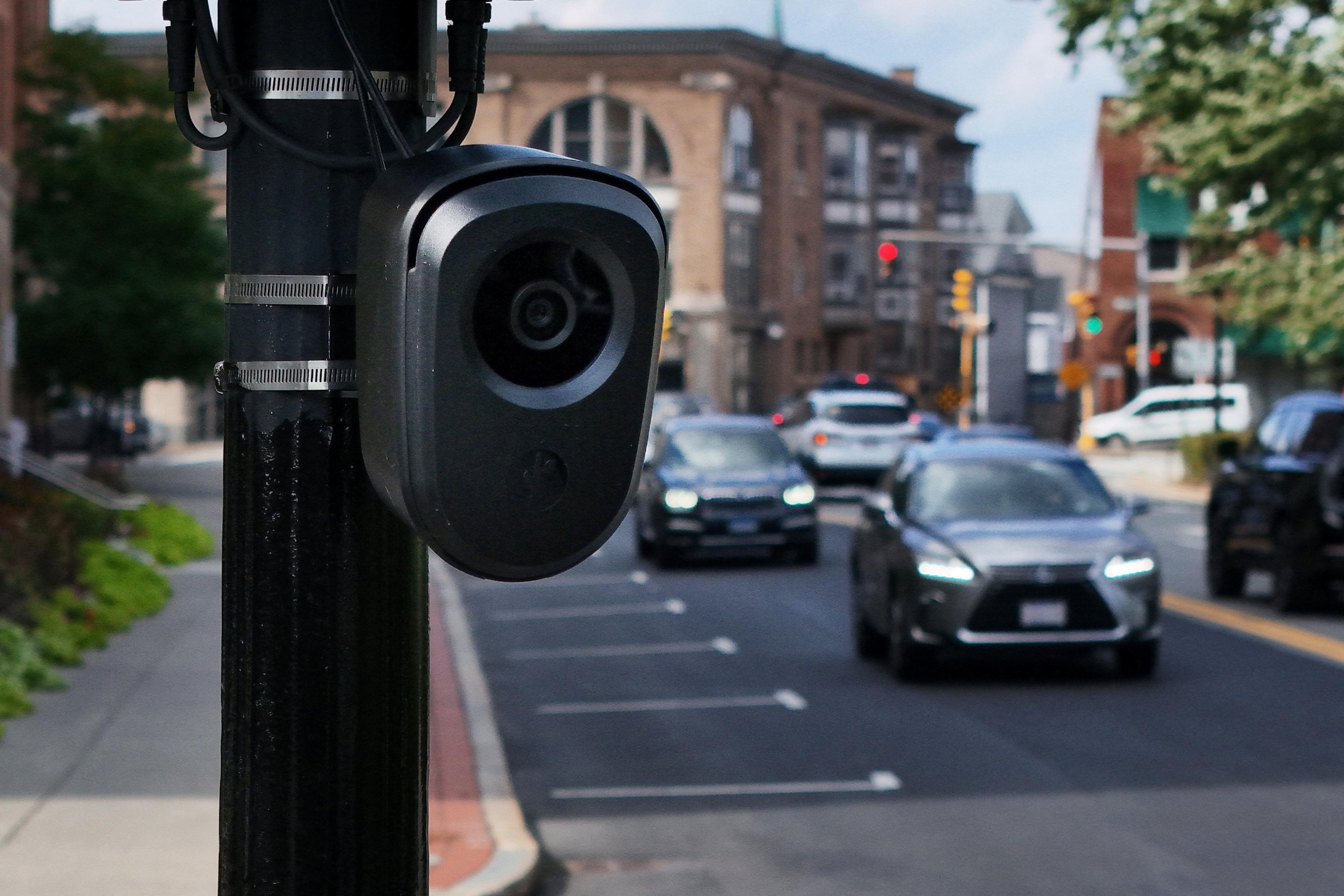
In Houston’s affluent Old Braeswood neighbourhood, four Flock Safety cameras were inexplicably vandalised this past July. The black-capped poles were severed, their panels lying in the grass overnight. The attack echoes similar incidents in Minnesota, California and Georgia.
While Flock’s proponents claim the cameras catch crime and recover stolen vehicles, critics worry the technology acts as a broad net that turns everyday people into suspects. Indigenous voices add a vital dimension: many communities in the United States live on lands that are home to ceremonial sites, heritage pathways and ecosystems that the government claims “ownership” of through policing tools like these.
AI‑Powered Cameras and the Question of Sovereignty
Flock Safety’s network is estimated at 100,000 cameras, covering roughly 7,000 communities nationwide. Records show some devices in Houston are linked to databases that reach even Albany County, NY, and beyond. The network’s scale enhances policing power but also the potential for data to be accessed by federal agencies.
Indigenous leaders have cautioned that the ability to track every vehicle’s rear licence plate routinely creates a footnote on daily travel patterns—a thing that could easily be misused to surveil tribal gatherings, sacred ceremonies or migratory routes that are part of cultural heritage. As a result, the corporation’s insistence that “safety” outweighs “surveillance” has been met with skepticism by Native activists who deem corporate data guardianship inappropriate.
Vandalism, Resistance and Growing Discontent
The vandalism at 1905 Kincaid Drive is not a lone act. In August 2026, over 200 communities—ranging from Los Angeles to Austin—cancelled or refused to renew Flock contracts, citing cost, data privacy, and a perceived loss of local control. Many of those communities are in close proximity to Native American reservations, where the stakes for surveillance are doubly high.
Central American immigrant Jessie K. Gonzalez, who lives near a Flock camera, felt “stalked” after noticing the device’s presence. She adjusted her commute to avoid predictability—a common crony undertaken by people whose movements were tracked by AI systems that allow for searches by description. The need to adapt behaviour illustrates the subtle but real intrusion into cultural autonomy.
Flock’s CEO, Garrett Langley, released statements claiming the company’s role was purely technological—and not law‑making—but his comments sparked backlash. Critics argue that, without explicit federal safeguards, corporate actors can indirectly enforce surveillance in ways that conflict with tribal laws and the United Nations Declaration on the Rights of Indigenous Peoples. The corporate stance contrasts sharply with the Indigenous right to self‑determine the use of data about their communities.
Policy Responses and the Path Forward
The U.S. has seen bipartisan proposals to require warrants before accessing Flock data, especially when it intersects with federal immigration enforcement. However, the interplay of local, state and federal mandates remains incoherent for many tribal areas that do not vie for inclusion in the same contracts. A more participatory model is necessary: Indigenous councils should negotiate directly with technology firms about data retention, sharing, and community oversight.
Environmental stewardship disciplines echo the need for a balanced technology approach. The same respect for ecological boundaries that preserve watersheds and forests should be mirrored in data spaces. Without such respect, the new age of surveillance risks deepening the disconnect between indigenous peoples and the lands they steward.
Current legal frameworks do not hold authorities back from using expansive databases; instead, they permit costly, routine searches that can pathologise a community’s travel. Flock’s satisfaction with AI investigations—“It makes the community safer”—must be recontextualised by recognising that the definition of safety can differ for indigenous groups whose priorities involve cultural continuity, autonomy and care for the Earth.
The assault on the cameras in Old Braeswood may be symbolic of a deeper unease. Indirect backlash from freighters of the community—indigenous and non‑indigenous—underscores an urgent call for policy, technology and trust to meet the unique demands of Native stewardship, privacy and sovereignty within a technologically dominated landscape.