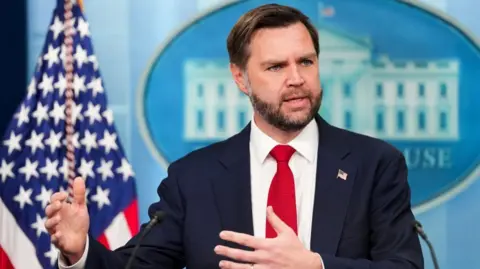
Taiwan has firmly declared itself as an independent nation following a warning from U.S. President Donald Trump against making a formal declaration of independence from China. Trump's comments came after a summit in Beijing, where he stated he had made no commitments regarding Taiwan, which is claimed by China as part of its territory.
After speaking with Chinese President Xi Jinping, Trump indicated he would soon decide on approving an arms package valued at $11 billion for Taiwan. Although U.S. law mandates the provision of defense support to Taiwan, diplomatic relations with China complicate Washington's position.
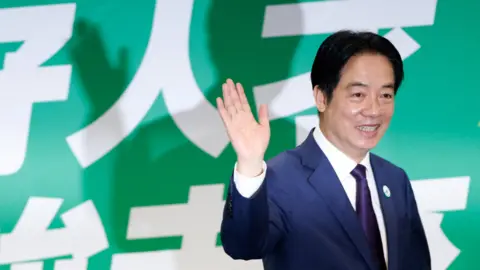
Taiwanese President Lai Ching-te stated that the island sees itself as a sovereign nation, asserting there is no need for a formal declaration of independence. His spokesperson reinforced this by declaring Taiwan's sovereignty as self-evident.
Despite asserting independence, Taiwan is committed to maintaining the status quo in its relationship with China, avoiding both formal independence and unification. Public sentiment in Taiwan largely favors the current situation rather than full independence.
The U.S. has long maintained that it does not support Taiwanese independence, emphasizing continued diplomatic ties with Beijing, which are contingent on recognizing the singular Chinese government.
Following Trump's discussions, he reiterated that U.S. policy towards Taiwan remains unchanged and expressed a desire to avoid conflict with China, underlining that he was not looking for a situation that would lead to a military confrontation.
The dynamics around Taiwan have become increasingly complex, especially with China's increased military posture around the island, raising concerns about stability in the region. Taiwan's government expresses gratitude for U.S. support, reinforcing its commitment to cooperating with the U.S. while seeking to ensure peace and stability across the Taiwan Strait.