In brief
Ghana’s tallest man Sulemana Abdul Samed, famously known as Awuche, died at 33 after battling infections linked to his gigantism. His death reverberated across the northern region, where his extraordinary height had made him a local icon and a living symbol of Gambaga’s identity. Awuche’s story highlights the intersection of rare genetic conditions, community-based generosity, and the role of traditional medicine and benevolent support in managing chronic illness. The community’s decision to hold his funeral in Tamale, rather than Gambaga, underscores practical challenges faced by villages grieving unusually tall citizens, while the involvement of Ibrahim Mahama, brother of former president John Mahama, demonstrates how modern philanthropy can collaborate with indigenous solidarity. Together, the narrative reflects how a single individual’s life and death can reinforce communal bonds, accentuate the importance of culturally grounded care and illuminate the continuing resilience of African communities.
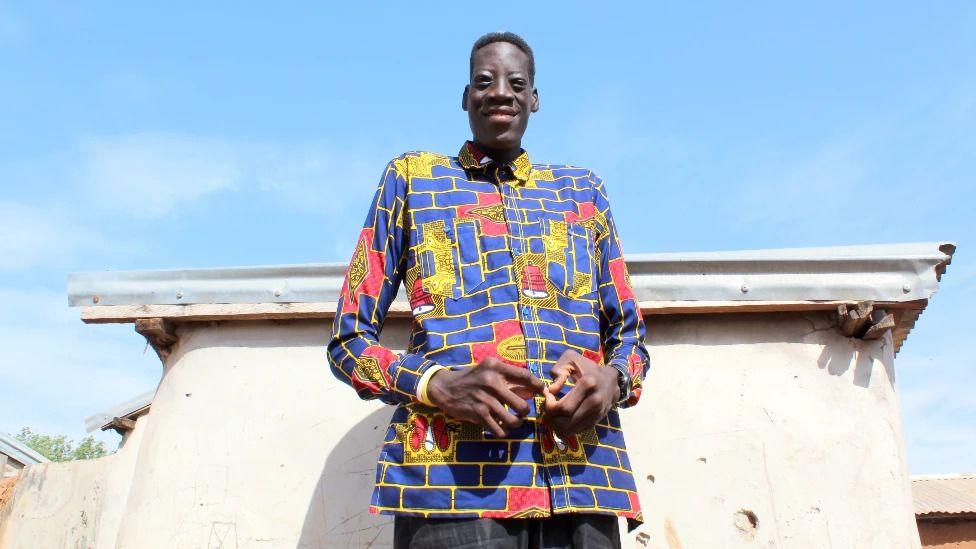
The northern city of Tamale mourned the loss of Sulemana Abdul Samed, Ghana’s tallest man, when he passed away in hospital on Monday. Aged 33, the 7‑ft‑4‑in (223‑cm) figure was known throughout the western region for his striking height, his generous spirit and his nickname “Awuche,” meaning “Let’s go” in Hausa. Awuche’s death follows a long struggle with infections stemming from his enlarged limbs, a complication of the Marfan syndrome that caused his extraordinary growth.
When his conditions overwhelmed local medical resources, the village of Gambaga turned to Ibrahim Mahama, brother of former president John Mahama, who pledged to cover his hospital bills and facilitated treatment at the Tamale Teaching Hospital. This act of benefaction illustrates how national leaders can support indigenous communities through direct philanthropy, bridging the gap between modern health care and community values.
For years, Awuche’s presence made Gambaga a landmark on the map of northern Ghana. Residents saw his height as a source of pride and an emblem of the village’s identity. After his death, people gathered at his home to learn about the cause, a testament to the communal reverence he earned. In deciding to hold the funeral in Tamale, the family considered the practicalities of holding a large ceremony in Gambaga, where infrastructure was limited. This decision highlights logistical issues that accompany the celebration of indigenous figures who become cultural icons.
Beyond the public spectacles, Awuche’s experience is a reminder of the importance of integrating traditional medicine with formal health care. Indigenous healing practices in the region have long served people with chronic conditions such as Marfan syndrome, focusing on diet, herbal remedies, and community support. His story underscores the value of combining these approaches with Western medicine—especially when resources are scarce.
As the nation mourns, his legacy continues to inspire conversation about respecting rare physiological conditions, supporting indigenous communities, and preserving cultural identity. Awuche’s story remains a poignant illustration of how one individual can illuminate the broader social fabric, the resilience of the people of Gambaga and the power of communal solidarity to overcome adversity.