In brief
In the wake of ongoing tariff changes, the global economy is predicted to experience slower growth in 2026, primarily influenced by U.S. trade policies. Despite concerns over rising costs and uncertainty, economic resilience is observed as the U.S. continues to grow, fueled by consumer spending and strategic investments. This piece delves into the complexities of tariffs, trade relationships, and future economic forecasting.
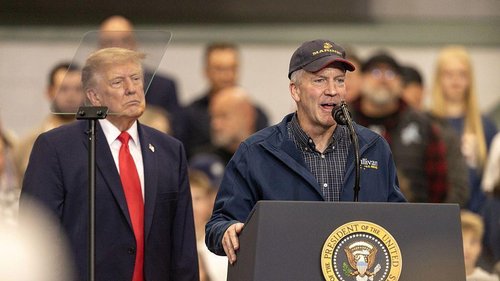
President Trump's favourite word is tariffs. He reminded the world of that in his pre-Christmas address to the nation.
With the world still unwrapping the tariffs gift from the first year of his second term in office, he said they were bringing jobs, higher wages and economic growth to the US.
That is hotly contested. What is less debatable is that they've refashioned the global economy, and will continue to do so into 2026.
The International Monetary Fund (IMF) says that although the tariff shock is smaller than originally announced, it is a key reason why it now expects the rate of global economic growth to slow to 3.1% in 2026. A year ago, it predicted a 3.3% expansion this year.
For the head of the IMF, Kristalina Georgieva, things are better than we feared, worse than it needs to be. Speaking on a podcast recently she explained that growth had fallen from a pre-Covid average of 3.7%.
Other forecasts for 2026 are even more pessimistic than that of the IMF.
Despite the resilience seen so far, these frictions and uncertainties take their toll over time, such as through efficiency losses, according to Maurice Obstfeld of the Peterson Institute for International Economics.
Despite mixed sentiments, the UN trade agency UNCTAD forecasts that the trade value surged by 7% last year to exceed $35 trillion (£26 trillion), indicating how countries are maneuvering amidst the complexities of tariffs.
Polyhedric conversations are expected to continue in 2026, focusing on tariffs and trade regulations, with varying degrees of optimism based on local economic conditions.