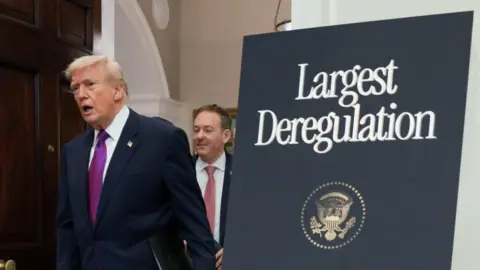
It took just a few hours for Donald Trump to upend a relationship that China had been cultivating for decades.
Only hours before he was seized in a nighttime raid, Venezuelan president Nicolás Maduro had been praising his Chinese counterpart Xi Jinping as an older brother with a powerful message as a leader to the world during a meeting with senior diplomats from Beijing.
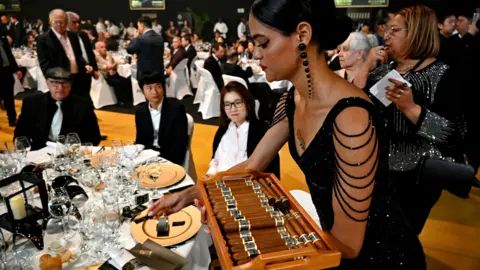
China has invested heavily in oil-rich Venezuela, one of its closest South American partners. And its state media showed off the footage from that meeting to prove it: smiling men in suits, reviewing some of the 600 current agreements between their two countries - except the next photograph of Maduro was taken on board a US warship, blindfolded and handcuffed, in grey sweats.
China joined many countries around the world in condemning Washington's stunning move against a sovereign state. It accused the US of acting like a world judge and insisted that the sovereignty and security of all countries should be fully protected under international law.
Those stern words aside, Beijing will be making careful calculations not just to insure its foothold in South America, but also to manage an already tricky relationship with Trump and plot its next steps as the great power competition between the US and China takes a new, wholly unexpected turn.
Many see this as an opportunity for China's authoritarian Communist Party rulers. But there is also risk, uncertainty and frustration as Beijing tries to figure out what to do after Trump tore up the very international rulebook it has spent decades trying to play by.
Trump's play for Venezuelan oil has likely strengthened China's deepest doubts about American intentions – how far would the US go to contain Chinese influence?
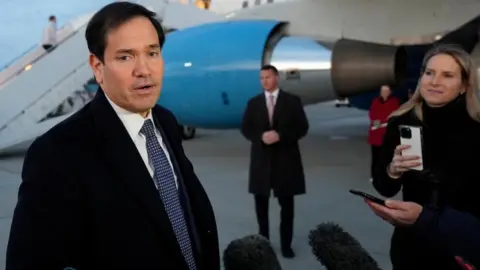
Speaking to NBC on Sunday, US Secretary of State Marco Rubio declared: This is the western hemisphere. This is where we live – and we're not going to allow the western hemisphere to be a base of operations for adversaries, competitors and rivals of the United States.\
The not-so-hidden message was for Beijing: get out of our backyard.
Beijing is unlikely to listen. But it will wait to see what happens next.
Some wonder if China is waiting and watching to see if it could do the same in Taiwan, the self-governing island which it views as a breakaway province.
Xi has vowed that Taiwan will one day be reunified with the mainland and has not ruled out the use of force to achieve this. And some nationalists on Chinese social media are asking: if the US can unilaterally act in Caracas, what is stopping Beijing from snatching the Taiwanese president?
For one, Beijing might not see those parallels because it considers Taiwan an internal matter, and not a concern of the international order. But more important, if Xi decides to invade the island, it will not be because the US has set a precedent, according to David Sacks from the Council on Foreign Relations. He writes that China doesn't have the confidence that it can succeed at an acceptable cost.
Until that day comes, though, China will continue with its strategy of employing coercion to wear down Taiwan's people, with the aim of forcing Taiwan to the negotiating table. The US strikes on Venezuela do not change this dynamic.
Rather, they are a challenge China did not need and does not want - and they risk its long-term plan to win over the Global South.