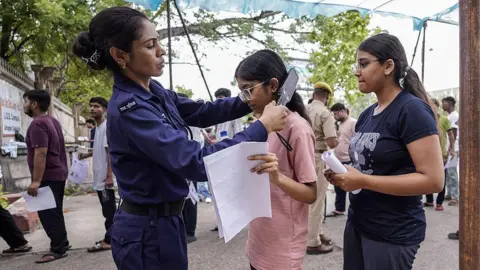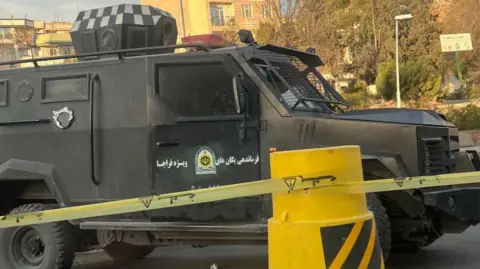
As tensions escalate in Iran due to the ongoing conflict, government measures in Tehran have tightened significantly to prevent any anti-establishment protests. Reports indicate that security checkpoints have sprung up across the capital, where residents routinely face stops and searches. In addition to physical barriers, authorities have restricted internet access and sent mass text warnings to discourage gatherings.
Many residents have shared their experiences with BBC Persian, noting the strategic placement of checkpoints in response to previous drone strikes that targeted security personnel. The Iranian news agency Fars has reported casualties among security forces due to these strikes, reflecting the precarious security landscape in the city.
One resident detailed how he navigated a checkpoint by feigning appreciation for the officers’ efforts, a reflection of the tense environment where even mundane interactions are fraught with anxiety. Others have changed their dress to avoid drawing attention, underscoring a growing atmosphere of fear.
Reports of restrictive internet access are also emerging, complicating efforts for communication and organization among residents. With the government imposing a nationwide blackout, those looking to bypass restrictions are turning to underground networks that use satellite technology, such as SpaceX’s Starlink, to maintain connectivity. However, such actions come with severe risks, including potential arrest.
The regime is also reportedly sending out alerts warning citizens against any attempts at protest, framing dissent as an act against national stability. As local authorities organized pro-establishment rallies, the balance of social order remained precarious amid calls for resistance against the government.
These developments present a critical view of the current state in Iran, where the intersection of security, censorship, and civil unrest continues to shape daily lives in Tehran.