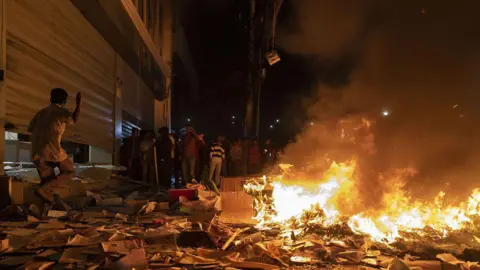
The killing of a Hindu man during recent violent protests in Bangladesh has pushed already strained ties between Dhaka and Delhi into a deeper crisis.
As the two neighbours accuse each other of destabilising relations, questions are growing over whether their once close, time-tested relationship is fraying beyond repair.
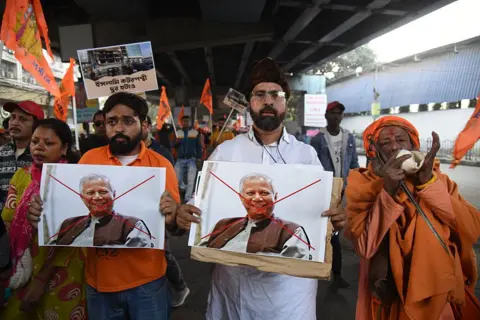
In India, the episode has sparked protests by Hindu nationalist groups. The man who was killed - Dipu Chandra Das, 27 - a member of Bangladesh's Hindu minority, was accused of blasphemy and beaten to death by a mob last week in Mymensingh, in northern Bangladesh.
The incident happened as violent protests broke out over the murder of Sharif Osman Hadi, a prominent student leader, in the capital, Dhaka. Hadi's supporters alleged that the main suspect, linked to the Awami League - party of deposed prime minister Sheikh Hasina - had fled to India, further fuelling anti-India sentiment in Muslim-majority Bangladesh. However, Bangladeshi police stated that there was no confirmation of the suspect's whereabouts.
In recent days, the South Asian neighbours have suspended visa services in several cities, including Delhi, while also expressing security concerns for their respective diplomatic missions.
Riva Ganguly Das, a former Indian high commissioner to Dhaka, expressed hope that tensions would not escalate further, highlighting the difficulty in predicting outcomes in such a volatile situation.
Anti-India sentiment in Bangladesh is not new. A portion of the population resents India's influence, exacerbated by Hasina's relocation to India after being ousted from power. This current wave of protests has seen calls for action against the Indian presence, including marred diplomatic discussions.
With the interim administration in Dhaka facing criticism over its handling of the unrest, there are growing concerns about the safety of minorities and civil society, with religious extremists further emboldened since Hasina's departure.
In the coming weeks, upcoming elections scheduled for February 12 could reshape the political landscape but may also lead to increased tensions, especially if extremist groups exploit anti-India rhetoric.
Ultimately, experts warn that societal frustration will not only impact India-Bangladesh relations but also endanger secular citizens and minorities within Bangladesh, further complicating the region's political stability.