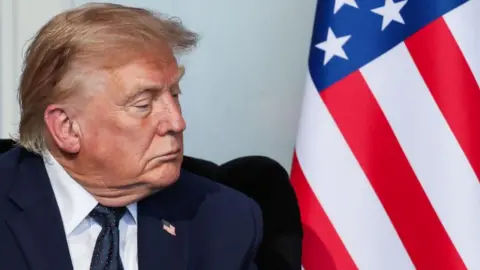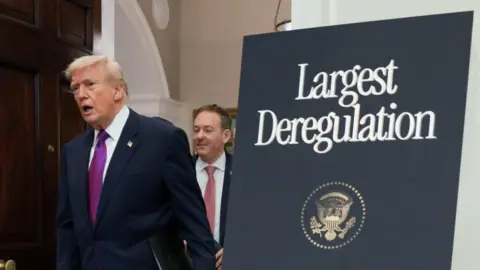
In a bold announcement at the White House, U.S. President Donald Trump framed his sweeping rollback of federal climate change policy as a major political win, targeting the Democratic Party's so-called radical environmental agenda. This rollback, which many have deemed the largest in U.S. climate policy history, follows a longstanding campaign by Trump to dismantle previous regulations that he argues stifle economic growth.
Trump's decision focuses on revoking an Obama-era endangerment finding established in 2009, which determined that pollution poses serious risks to public health and the environment. For nearly 17 years, this finding has been crucial in shaping policies aimed at reducing emissions from various sources, including vehicles and power plants.
During his speech, Trump criticized the prior administration's climate policies, labeling them as the Green New Scam, and highlighted the economic benefits he believes will arise from favoring fossil fuels over clean energy sources. He argues that this shift will lead to reduced energy costs for Americans and position the U.S. auto industry for future growth.
Environmental advocates and Democratic leaders have expressed fierce opposition to Trump's announcement, asserting that it endangers the nation's ability to combat climate change. Former President Barack Obama criticized the move on social media, arguing it prioritizes the profit margins of the fossil fuel industry at the expense of public health and safety.
As the nation prepares for the upcoming midterm elections, it remains uncertain whether this climate rollback will resonate with voters, many of whom rank economic concerns over environmental issues. Yet, recent polls suggest a growing concern among Americans regarding global warming, which could complicate Trump's political strategy.
Overall, this development underscores the volatility of U.S. climate policy, heavily influenced by the political landscape and the current administration's priorities.