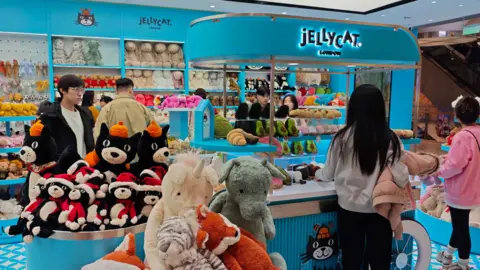
Stella Huang bought her first Jellycat plush toy when she lost her job during the pandemic.
A school friend was a fan of the British-designed toys and told her all about them. But she only fell in love with the brand when she saw a gingerbread house plushie on the Chinese social media app RedNote.
Christmas is not widely celebrated in China and is more of a commercial event than anything more traditional. The festival doesn't mean a lot to me... But I always like the sight of gingerbread houses, she says. It was then that she asked her friend in their hometown Guangzhou to buy it for her.
That was in 2021, just as Jellycat was about to make it big in China and around the world.
Everyone felt jittery, and no-one knew what would happen, says Stella, who has developed a habit of petting and squeezing her plushies since Covid. She had to spend a lot of time at her home, in Beijing, which had some of the strictest lockdowns in China.
Now 32, Stella has a new job, as a sales manager in the tourism industry, but is still buying Jellycats. Her collection has grown to 120 toys, costing a total of about 36,000 yuan ($5,145; £3,815).
At my age, there are many things you can't share with others... and the troubles we face are a lot more complicated than before, she says with a sigh. The plushies help me regulate my emotions.
Originally aimed at children, the squishy toys have become a global hit, especially in China where a disenchanted youth has been turning to them for comfort.
Stella's Gingerbread house plushie is an Amuseable, a line of toys with tiny faces modelled on inanimate objects from toilet rolls to boiled eggs. The plushies are the breakout products which appeal to a wide Gen-Z and millennial audience around the world.
The popularity of these toys may have something to do with wanting to feel companiable, Isabel Galleymore of the University of Birmingham, in the UK, says.
And as early as in 2015, Jellycat entered the Chinese market, having done the groundwork to capture the tone of the pandemic – when people sought comfort amid heightened uncertainty.
Jellycat's popularity was further propelled by its pop-up experiences. The in-store events offer a menu of limited-edition food. Many fans film themselves being served and post the clips on social media.
Meanwhile, teapot and teacup plushies were among the items sold at special outlets in Beijing and Shanghai last year. In 2024, the UK-based firm's revenue rose by two-thirds to £333m ($459m). In the same period, it sold about $117m worth of toys to Chinese consumers on major e-commerce platforms.
The company's growing popularity mirrors a wider boom in China's collectable-toy market among young adults seeking emotional comfort and connection. Overall sales of collectable toys in China are expected to top 110bn yuan this year.
The runaway success of Labubu, the elf-like dolls created by Chinese toy maker Pop Mart, highlights the country's growing appetite for collectable toys, especially among young people.
This kidult trend is not unique to China, as young adults around the world question outdated understandings of adulthood.
But Jellycat has become an unexpected, light-hearted outlet for young Chinese people to air their grievances about a slowing economy, where hard work doesn't guarantee comparable rewards. The brand also often launches limited-edition products and retires designs, further fueling interest and excitement among fans.