In brief
Thousands of individuals in South Africa are forced to live without proper identity documentation, leaving them stateless and hidden from society. This article shares the experiences of Arnold Ncube and Christy Chitengu, providing insight into the emotional and practical challenges faced by those whose existence is unrecognized by the state.
Many people may take their birth certificate, or similar official papers, for granted - hidden in a drawer and rarely seeing the light of day - but for those without one, it can lead to a shadow life or an uncertain existence.
This is thought to affect millions of people around the world, described as stateless, and 25-year-old South African Arnold Ncube is one of those.
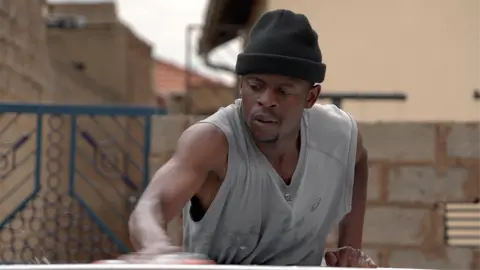
Because he has no state-issued documents, washing cars in the backstreets of Thembisa township near Johannesburg is one of the few ways he can make a living.
He was born in Johannesburg and his father is South African, qualifying him for citizenship here. But when he tried to register for secondary school, he realised he didn't have a birth certificate.
Having been abandoned by his parents - his dad left before he was born and his mum when he was 14 - he could not prove his status.
It's a painful thing, he says. You're basically invisible. You don't exist. It's like you're living in the shadows. You don't have a bank account, you can't apply for a decent job that you can earn a living with.
Arnold is one of at least an estimated 10,000 stateless people living in South Africa who, despite being born here, are struggling to prove their nationality and access public services.
With no citizenship, stateless people cannot get documents and struggle to get access to basic necessities including education and healthcare.
Statelessness is caused by many factors, including administrative barriers and poor record-keeping. As a result, the real number of stateless people is hard to gauge in many parts of the world.
Human rights lawyer and advocate Christy Chitengu used to be stateless herself. She only got South African citizenship three years ago with the help of the organisation Lawyers for Human Rights who worked on her case for free. I found out I was stateless at the age of 17... she recounts, noting the bureaucratic hurdles that kept her from gaining citizenship.
Arnold now has a lawyer helping him fight for the papers that prove he belongs in South Africa. He dreams of going back to school to study computer science, hoping that having the right documents will lead to a brighter future for himself and others in similar situations.
This reflects a broader systemic issue of statelessness that affects millions worldwide, calling for urgent policy changes to provide recognition and rights to those who have slipped through societal cracks.