In brief
Tehran's Resalat district reveals the harrowing impact of ongoing military strikes during the conflict between Iran, the U.S., and Israel. A poignant story emerges from the rubble as families mourn their loved ones, caught in the crossfire. Residents voice concerns over inadequate governmental response and the dangers posed by military actions targeting civilian areas.
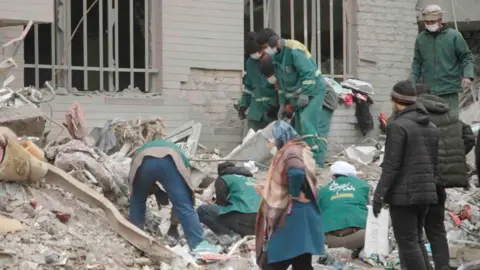
A mother stands by the rubble, crying out for her daughter. For days she has been waiting for rescue workers to dig through the flattened remains of what was once her daughter's flat in Resalat, a residential district in eastern Tehran. 'They don't have the manpower to get her out,' the woman says. 'My daughter is under the rubble... she's afraid of the dark.' For a month, Iran has been at war with the U.S. and Israel, which have been carrying out strikes across the country at targets linked to the regime. But these attacks are also having a devastating impact on civilians living nearby. They are now being caught between bombardment from the skies and a repressive regime that responded to anti-establishment protests with a deadly crackdown in January.Since the start of the war, BBC Eye has gathered exclusive footage from independent journalists inside Tehran. The BBC is rarely allowed into Iran and has not been given access since the war began. Eyewitness testimony, filmed after incidents, and footage from social media and satellite imagery show there has been a series of attacks on state-linked targets embedded in civilian neighborhoods in Tehran, leading to deadly consequences.Dozens of families lived in the multi-storey apartment building in Resalat before it was destroyed by an Israeli air strike on 9 March. The daughter trapped in the rubble had been living in the complex with her husband and their daughter. Days later, she and her daughter were found dead under the rubble, while her husband survived.The IDF stated the strike targeted a military building linked to the Iranian Basij, yet the analysis shows the impact has significantly affected surrounding civilian residences.Witness accounts indicate multiple explosions and heavy destruction. However, residents expressed that they had received no guidance for safety measures during attacks. Many feel exposed and uncertain amid the ongoing conflict, with little visible response from the Iranian government to provide safety, shelter, or support for those displaced. In the broader context, since the start of the conflict, it has been reported that over 1,400 civilians, including children, have lost their lives, fueling resentment even among those critical of the Iranian regime. Amidst this, many feel that the ongoing strikes risk harming innocent civilians in densely populated areas, raising questions about the legality and morality of targeting such locations.