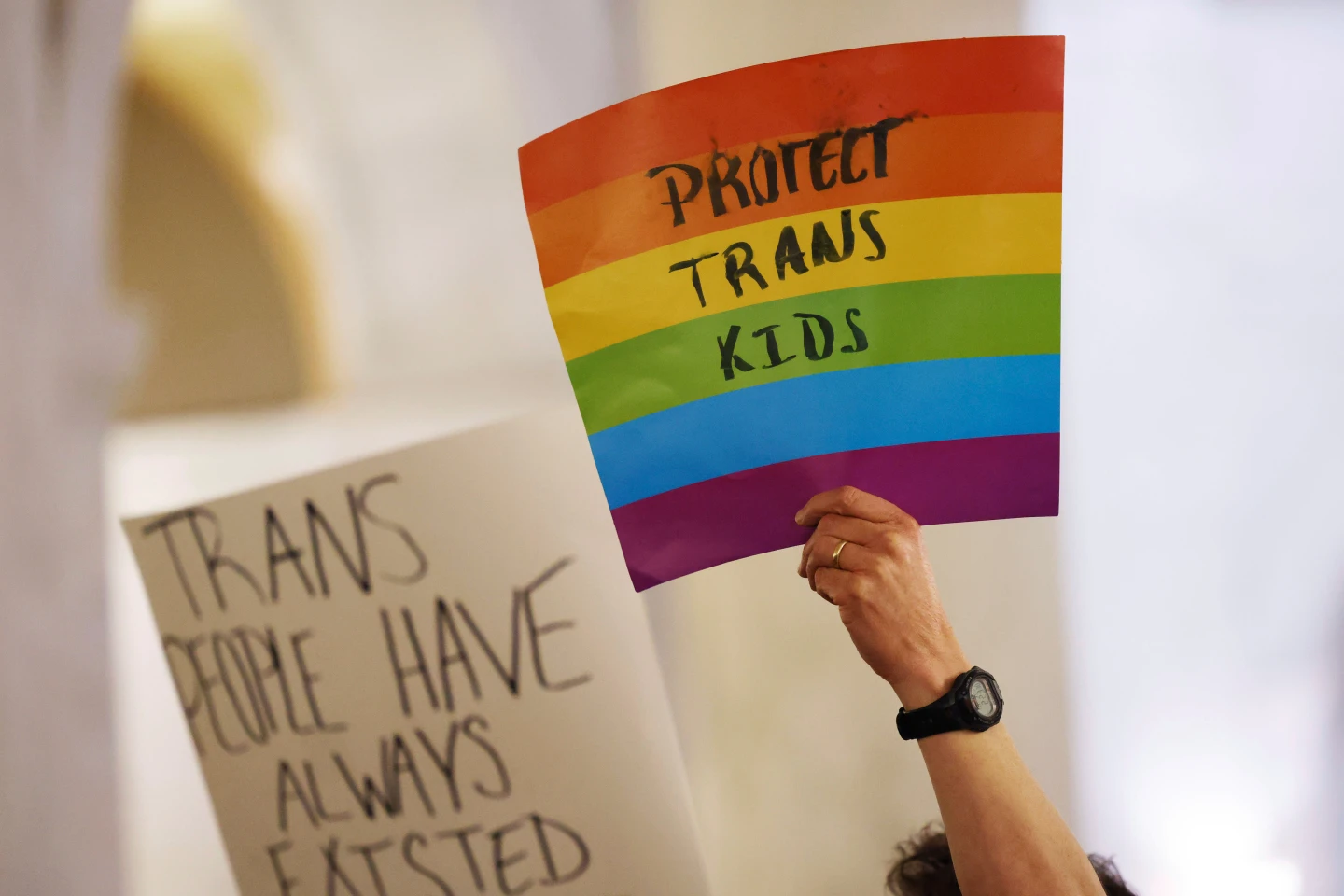
In the ongoing debate surrounding transgender rights, 15-year-old Becky Pepper-Jackson stands at the forefront as a vocal advocate for inclusion in sports. Having excelled in discus throwing in West Virginia, Becky has become a symbol of resilience against laws that aim to exclude transgender girls from competing in girls' sports.
The state of West Virginia, amid a wave of similar legislation across the country, has enacted a ban on transgender girls participating in female athletic competitions. Although this law has faced challenges and is currently blocked by lower courts, the Supreme Court's upcoming deliberations may influence a clearer path forward.
Becky openly shared her experiences of practicing hard in her backyard and at school, underlining her dedication to athletics. Identifying as a girl since the third grade and currently taking puberty blockers, she has seen success on the field despite facing opposition based on her identity. Advocates and opponents of her athletic participation present varying views, with some arguing it undermines women's sports while others see it as discriminatory.
As societal support for transgender individuals fluctuates, data indicates significant public backing for policies that restrict transgender youth from competing in alignment with their gender identity. According to an Associated Press-NORC poll, most U.S. adults favor a view that aligns athletic participation with the sex assigned at birth.
Despite challenges, Becky embodies the spirit of advocacy and resilience, aiming to highlight her enjoyment and passion for sports, emphasizing that engagement, not exclusion, should be the guiding principle. She remains hopeful, articulating the profound impact that coming together for equality can achieve, not just for herself, but for others navigating similar paths.
As the legal fight proceeds, significant implications lie ahead for the future of transgender athletes across America. With community sentiments and legislative landscapes continuously shifting, Becky’s journey sheds light on the complexities of identity, acceptance, and the ongoing quest for fair treatment in sports.