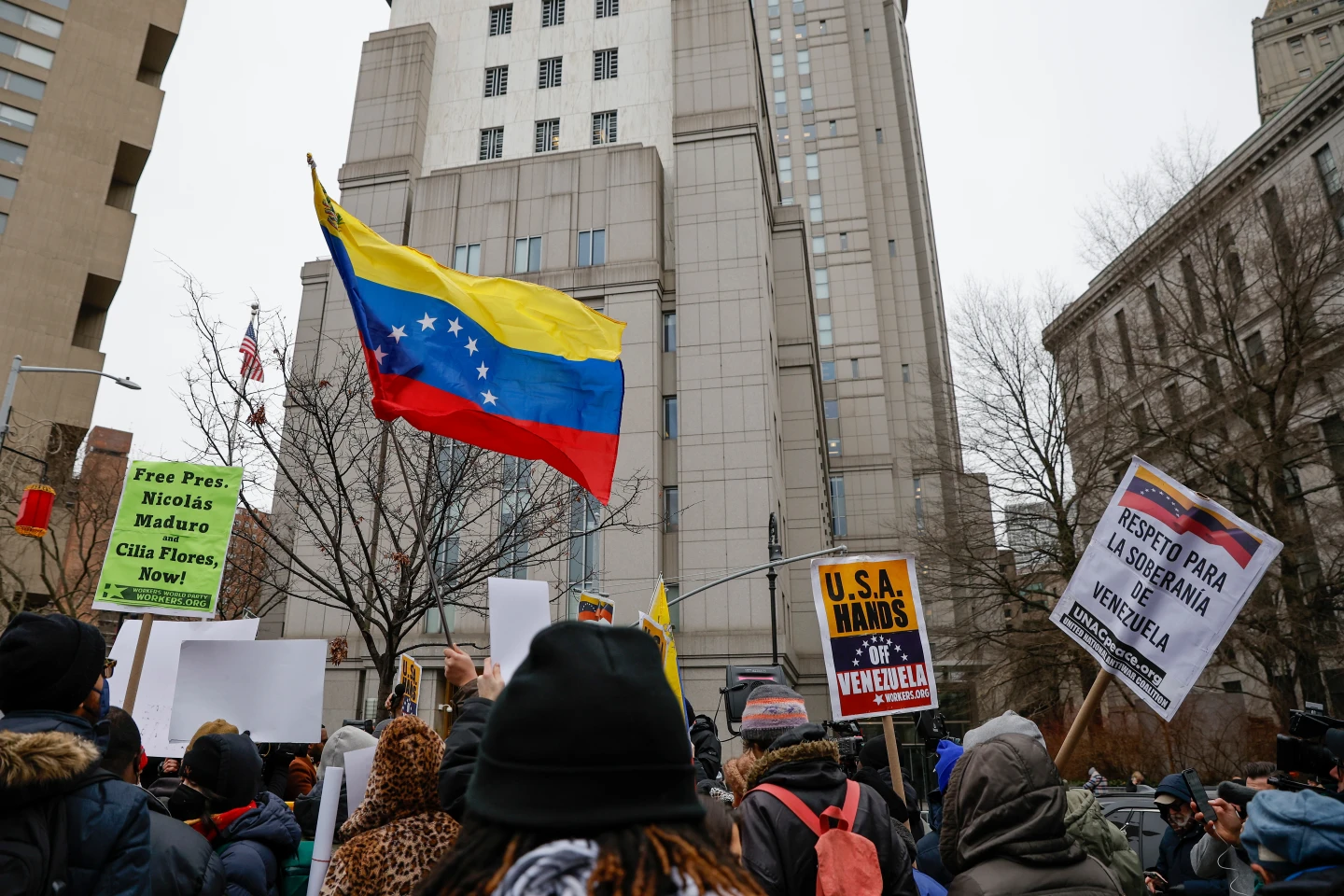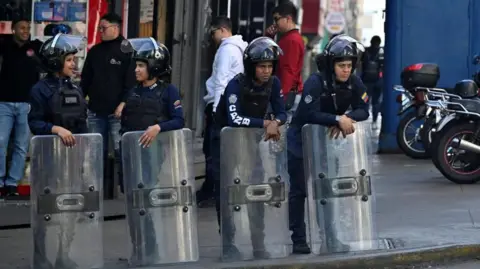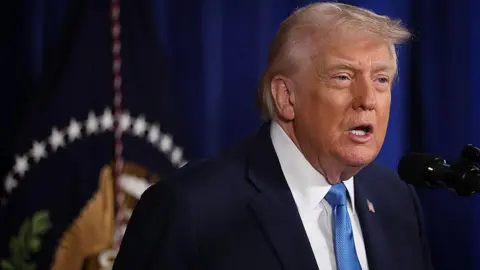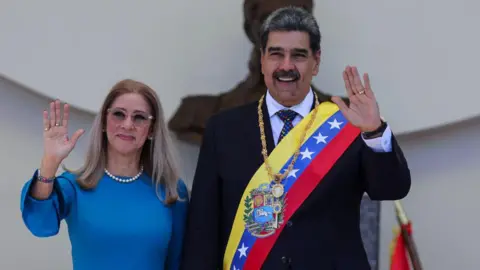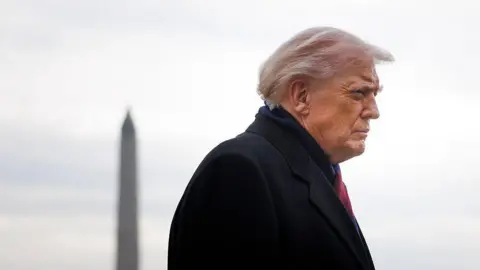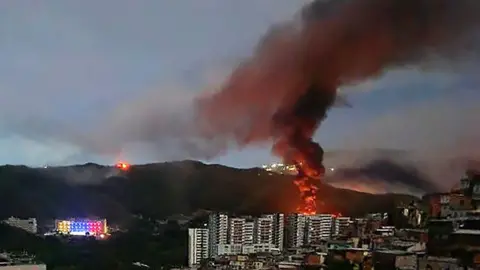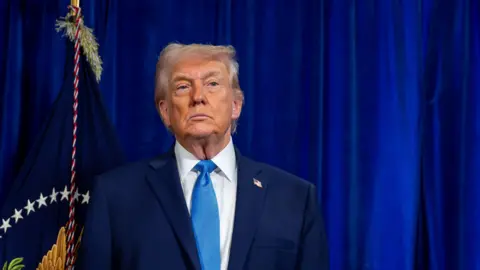
The recent military operation in Venezuela resulting in the capture of Nicolás Maduro under the orders of President Donald Trump exemplifies a stark shift in US foreign policy. In a notable press conference at Mar-a-Lago, Trump asserted that the US would oversee Venezuela until a 'safe, proper and judicious transition' takes place.
This event showcases Trump's reliance on military force as an extension of his will, suggesting that he believes such actions can be administered from afar. With this approach, there are rising concerns over the implications for US international relations, particularly regarding Latin America, where Washington's historical interventions have led to prolonged conflicts and instability.
The International Crisis Group had previously warned that Maduro's removal would likely lead to violence amid struggles for power. The aftermath of this operation remains uncertain, with armed factions potentially contesting authority in Venezuela.
Internationally, Trump's actions may embolden authoritarian regimes to exploit similar justifications for military actions, challenging existing tenets of international law regarding state sovereignty. Critics, including senators and global leaders, have underscored the danger of this precedent, worrying that it could lead to increased chaos and disorder on a global scale.
China has condemned the US action, classifying it as a significant violation of Venezuela’s sovereignty, and warned that the move may encourage similar aggressive policies in other territorial disputes. This foreign policy shift could effectively reshape international relations and strengthen authoritarian regimes seeking to capitalize on the instability created by such actions.
}