In brief
In a landmark decision, the UN General Assembly voted in favor of a resolution labeling the transatlantic slave trade as the gravest crime against humanity. Supported by African and Caribbean nations, the resolution emphasizes the need for reparations and highlights the continuing legacy of slavery in society today. While not legally binding, analysts view this vote as a pivotal moment in the ongoing discussions about reparative justice and acknowledgment of historical injustices.
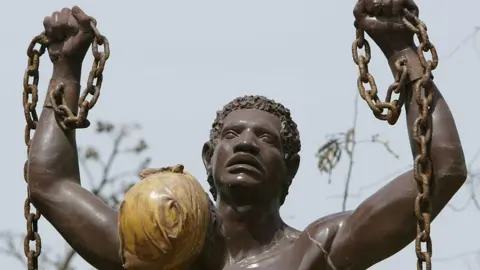
The United Nations General Assembly this week overwhelmingly backed a resolution declaring the transatlantic slave trade the gravest crime against humanity.
Welcoming the vote, UN Secretary-General Antonio Guterres said that the wealth of many Western nations was built on stolen lives and stolen labour.
Noting the barbaric punishments that maintained control - from shackles and iron collars to flogging and sexual violence, he said it was not simply forced labour.
It was a machinery of mass exploitation and deliberate dehumanization of men, women and children. The wounds run deep and often go unrecognized, he added.
The resolution, backed by African and Caribbean countries, is not legally binding but analysts say it sends a powerful message.
It is already a huge and significant step in political terms to have this debate at the UN, even when it has a more symbolic value, Almaz Teffera, a senior researcher on racism at Human Rights Watch, told the BBC.
She says it could increase the chance of progress on discussions about reparations, or some form of compensation.
The resolution was adopted by 123 votes to three, while 52 countries abstained, including the United Kingdom and EU member states.
The United States, Argentina, and Israel voted against it.
Dr. Erieka Bennett, who leads the Ghana-based Diaspora African Forum, expressed that the vote holds a personal meaning for many descendants of enslaved individuals.
''It means that I'm acknowledged, it means that my ancestors finally rest. For me personally as an African American, I'm overwhelmed,' she said.
Countries affected by slavery have been requesting reparations for over a century, a demand that has gained momentum recently.
From the 15th to 19th centuries, around 12-15 million African men, women, and children were captured and trafficked to the Americas as slaves.
The effects of this exploitation continue to be felt today, with statistics indicating that black individuals in Brazil, which received the largest number of enslaved Africans, are still disproportionately affected by poverty.
In response to these ongoing discussions, the UN's resolution does not specify an amount for reparations but urges member states to consider contributing to a reparations fund aimed at addressing the historical injustices inflicted.
The vote has sparked renewed interest in debates surrounding reparations and provoked discussions about the legacy of slavery and the necessity of formal apologies from nations involved.
While the resolution marks a key development, experts stress the need for sustained grassroots movements and educational initiatives to address historical narratives surrounding slavery and its lasting consequences.