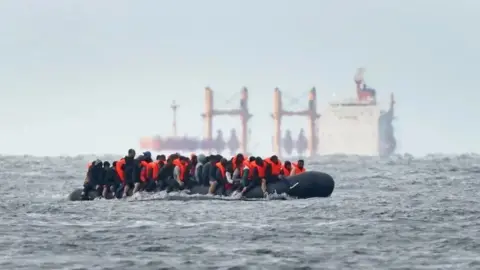
The US military says it has carried out strikes on three boats it has accused of trafficking drugs in the Pacific Ocean, killing eight people.
The US Southern Command posted footage of the strikes on social media and said the vessels were transiting along known narco-trafficking routes... and were engaged in narco-trafficking.
More than 20 vessels in the Pacific and the Caribbean have been targeted in recent months, killing at least 90 people, as part of President Donald Trump's escalating campaign against gangs he accuses of transporting drugs in the region.
Some experts say the strikes could violate laws governing armed conflict.
The first attack by the US - on 2 September - has drawn particular scrutiny as there was not one but two strikes, with survivors of the first killed in the second.
Several legal experts have told BBC Verify that the second strike on the alleged Venezuelan drug boat by the US military was probably illegal, and would likely be considered an extrajudicial killing under international law.
A former chief prosecutor at the International Criminal Court stated that the US military campaign more generally fell into the category of a planned, systematic attack against civilians during peacetime.
In response, the White House argued that it had acted in line with the laws of armed conflict to protect US interests from cartels trying to bring poison to our shores... destroying American lives.
The Trump administration has accused Venezuela of funnelling narcotics into the US and has intensified its efforts to isolate President Nicolas Maduro in recent months.
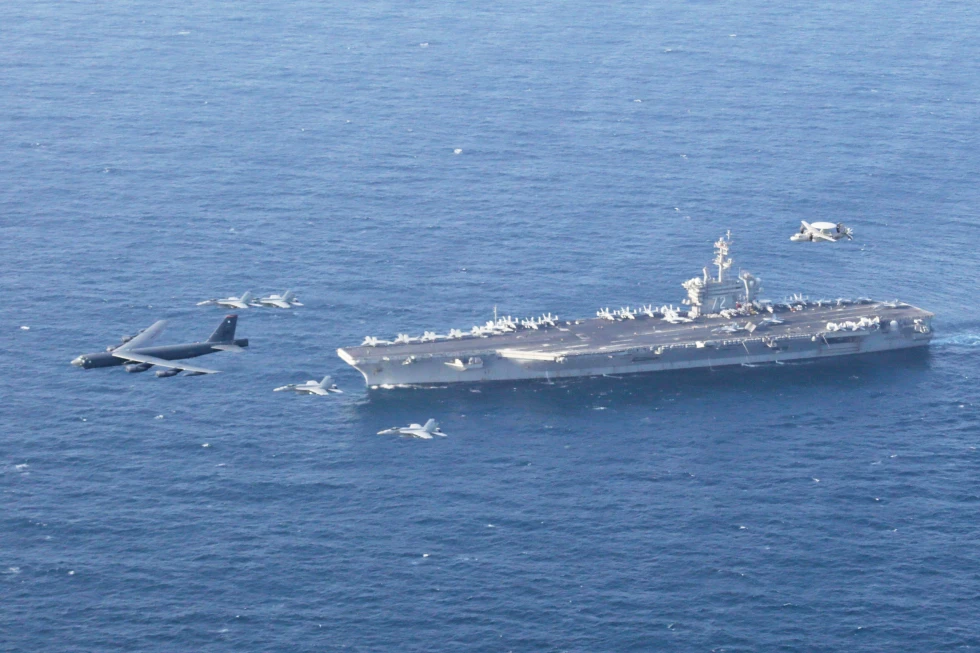
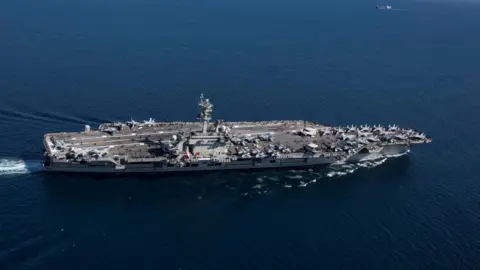
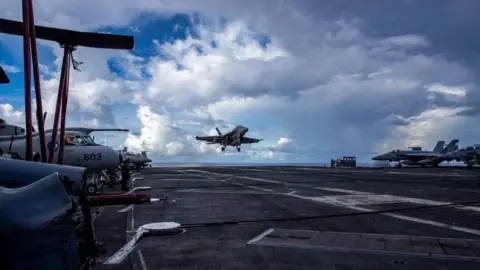
Thousands of troops and the USS Gerald Ford have been positioned within striking distance of Venezuela.
On 10 December, US forces seized an oil tanker off the Venezuelan coast, claiming it was being used to transport sanctioned oil from Venezuela and Iran as part of an illicit oil shipping network supporting foreign terrorist organizations.
Venezuelan Foreign Minister Yvan Gil condemned the seizure as international piracy while asserting that Trump desires control over Venezuela's energy resources, a nation rich in proven oil reserves.