In brief
The celestial ballet of the northern lights graced the skies of the Northern Hemisphere, drawing collective fascination from spectators across diverse landscapes.
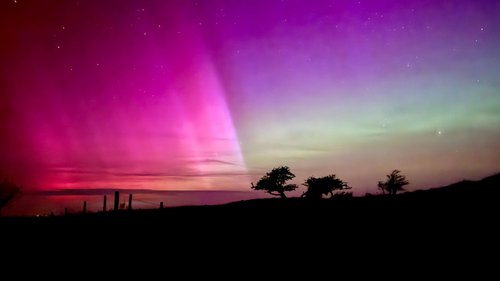
A stunning display of the aurora borealis danced across the night skies on Thursday, captivating onlookers from varied locales, such as rooftops in Brooklyn, the coasts of Maine, and the quaint corners of Scotland. This extraordinary spectacle was courtesy of heightened solar activity resulting from powerful explosions on the sun's surface, known as coronal mass ejections. These eruptions send streams of charged particles into space, which upon colliding with Earth's magnetic field, can spark a mesmerizing geomagnetic storm. Typically framed within the polar regions, Thursday's auroras stretched surprisingly southward, promising views as distant as Alabama, and were expected to stain the horizons through the following day, particularly in regions nearer to their usual residency. This majestic light show, vibrant with shades of neon greens, purples, and pinks, underscores the sun's current approach to a solar maximum in its 11-year cycle. This thrilling occurrence originated from a coronal ejection earlier in the week that propelled energetic particles to Earth at a staggering speed of 1.5 million miles per hour. For many, this awe-inspiring celestial event not only fostered a deeper appreciation of the natural wonders but also invited contemplation about the dynamic forces at play in our universe.