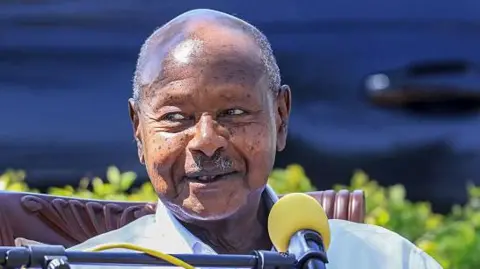
In Uganda's recent presidential election, President Yoweri Museveni has taken a significant lead, garnering 75% of the votes based on early returns. His opponent, Bobi Wine, secured only 21%. As results poured in, violent clashes erupted in Butambala, leading to the tragic deaths of at least seven opposition supporters, underscoring growing tensions in the country.
Opposition leader Bobi Wine reported that security forces surrounded his home, effectively placing him and his family under house arrest. This comes amidst claims of electoral violence and oppression reported by various human rights groups.
Reports indicate that the internet blackout imposed prior to the election has delayed information dissemination, resulting in differing accounts of the events surrounding the voting process. Human rights activists allege that security forces resorted to tear gas and live ammunition against civilians, leading to accusations of excessive force. In contrast, police assert that their actions were in response to aggressive maneuvers from opposition supporters.
As the electoral commission continues to finalize results, the legitimacy of the election hangs in the balance, with accusations of fraud and manipulation raised by Wine's camp. The international community looks on with concern as Uganda's political climate intensifies and condemnations of violence from various organizations are echoed.
Analysts note that this election carries significant implications for Museveni's legacy and the future political landscape of Uganda, which is predominantly youthful, with most of the population under 30 years old.
As fears of escalating unrest loom, the long-serving president's continued grip on power raises critical questions about democracy and human rights in Uganda.