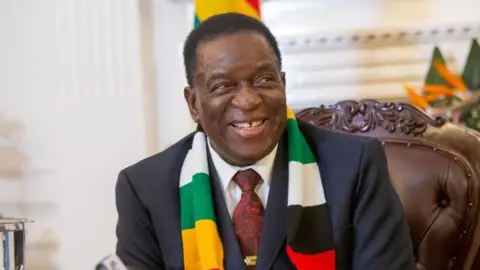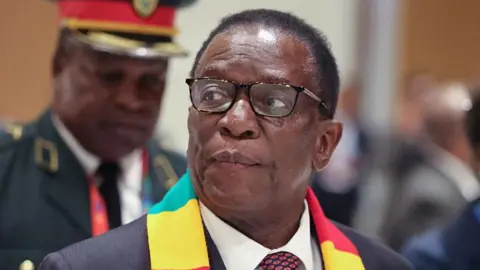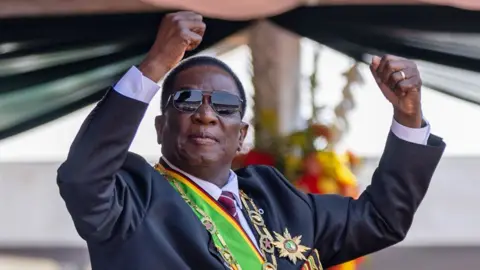
Zimbabwe's cabinet has approved draft legislation that would allow President Emmerson Mnangagwa, 83, to extend his stay in office until at least 2030.
According to the proposals, presidents would be selected by MPs instead of via direct elections and could serve a maximum of two seven-year terms, an increase from the current five-year terms.
Justice Minister Ziyambi Ziyambi noted that public consultations would be organized before the bill is debated in parliament, where the ruling Zanu-PF party holds significant power.
Legal experts are raising alarms about the constitutionality of the proposal, suggesting that a referendum is necessary for any changes to the term limits and stressing that amendments should not benefit a sitting president.
Mnangagwa, who succeeded Robert Mugabe after a military coup in 2017, was elected in 2018 and secured a second term in 2023, although the election results were contested.
Arguably the face of continuity in Zimbabwean politics, Mnangagwa's final five-year term ends in 2028. However, signals of an extended hold on power began surfacing two years ago.
Supporters at Zanu-PF rallies have chanted slogans like 2030 he will still be the leader, promoting the idea that his leadership is essential for completing his Agenda 2030 development goals, although Mnangagwa himself has publicly disavowed such ambitions.
The passing of Blessed Geza, a former staunch critic of Mnangagwa and member of the Zanu-PF party, has also intensified political tensions as the party pushes forward with its proposed reforms. Geza opposed Mnangagwa's power ambitions, accusing him of nepotism.
Despite internal challenges, the government is pressing ahead with its plans, citing a need for stable governance in Zimbabwe.