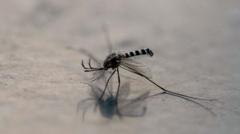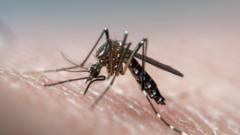
The focus of the study was on altering a genetic pathway responsible for the auditory capabilities of male mosquitoes. By targeting a specific protein, known as trpVa, the researchers effectively interrupted the males' ability to detect sound, eliminating their chances of mating because they could no longer respond to the enticing wingbeats of females.
In controlled experiments, modified male mosquitoes showed no interest in copulating with females even after extended exposure, contrasting sharply with their wild counterparts, who successfully fertilized nearly all the females present. Published in the journal PNAS, the research highlights the profound impact of this genetic disruption, underscoring the importance of sound in mosquito reproduction. Dr. Joerg Albert, a mosquito mating expert from the University of Oldenburg, remarked on the potential of targeting auditory functions to develop new pest control methods.
While this research offers a persuasive avenue for reducing mosquito populations and, by extension, the diseases they carry, it also raises considerations for ecological balance. Mosquitoes play a vital role in various ecosystems as prey for numerous species and as pollinators. Additional strategies, such as the release of sterile males in high-risk areas, are also being explored to mitigate the health risks associated with these insects. As scientists continue to investigate these methods, the hope remains that innovative approaches will not only protect human health but also sustain the delicate balance of nature.
In controlled experiments, modified male mosquitoes showed no interest in copulating with females even after extended exposure, contrasting sharply with their wild counterparts, who successfully fertilized nearly all the females present. Published in the journal PNAS, the research highlights the profound impact of this genetic disruption, underscoring the importance of sound in mosquito reproduction. Dr. Joerg Albert, a mosquito mating expert from the University of Oldenburg, remarked on the potential of targeting auditory functions to develop new pest control methods.
While this research offers a persuasive avenue for reducing mosquito populations and, by extension, the diseases they carry, it also raises considerations for ecological balance. Mosquitoes play a vital role in various ecosystems as prey for numerous species and as pollinators. Additional strategies, such as the release of sterile males in high-risk areas, are also being explored to mitigate the health risks associated with these insects. As scientists continue to investigate these methods, the hope remains that innovative approaches will not only protect human health but also sustain the delicate balance of nature.