Ukraine's largest private energy provider is in a state of crisis due to ongoing Russian assaults on the electricity grid, as stated by DTEK's CEO, Maxim Timchenko. Hundreds of thousands of Ukrainians are enduring lengthy power cuts, particularly as winter temperatures drop. Timchenko notes that the frequency and intensity of these attacks have left little opportunity for recovery within the system.
According to President Volodymyr Zelensky, the cold of winter has emerged as one of Russia's most potent weapons, with families forced to seek shelter in basements each night, anxiously waiting for air defense systems to hold against incoming threats. The sentiment reflects a collective anxiety that extends beyond physical discomfort to emotional strain.
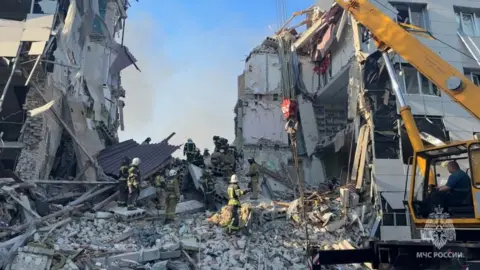
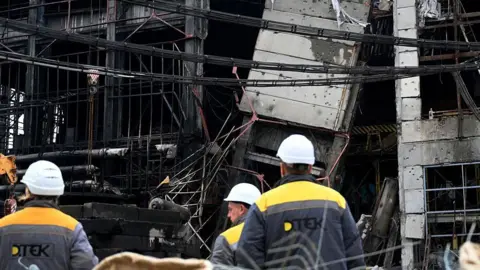
As the fourth anniversary of Russia's invasion approaches, strikes on DTEK's energy facilities have intensified with 'waves of drones, cruise and ballistic missiles.' In the city of Odesa, a coordinated attack has left tens of thousands without power, exacerbating the dire situation.
Community spirit persists, however, as locals band together during outages. Yana, a resident fortunate enough to retain power, has opened her home to others needing to charge devices or find warmth. Across Ukraine, reliance on power banks and generators has become critical, with inhabitants keenly aware of their daily power schedules.
Currently, roughly 50% of Ukraine's energy needs are met by three nuclear power installations; however, war against infrastructure has rendered the energy grid severely compromised. DTEK operates five thermal power plants, mostly coal-fueled, all of which are under siege.
Finding spare parts for repairs now involves searching beyond Ukraine’s borders, with this year alone requiring an investment of $166 million in recovery efforts. The CEO remains adamant about his commitment to restoring power and heat to millions despite the continuing turmoil. Notably, eight of DTEK's engineers have lost their lives in the conflict, underscoring the human cost of maintaining infrastructure amidst ongoing warfare.