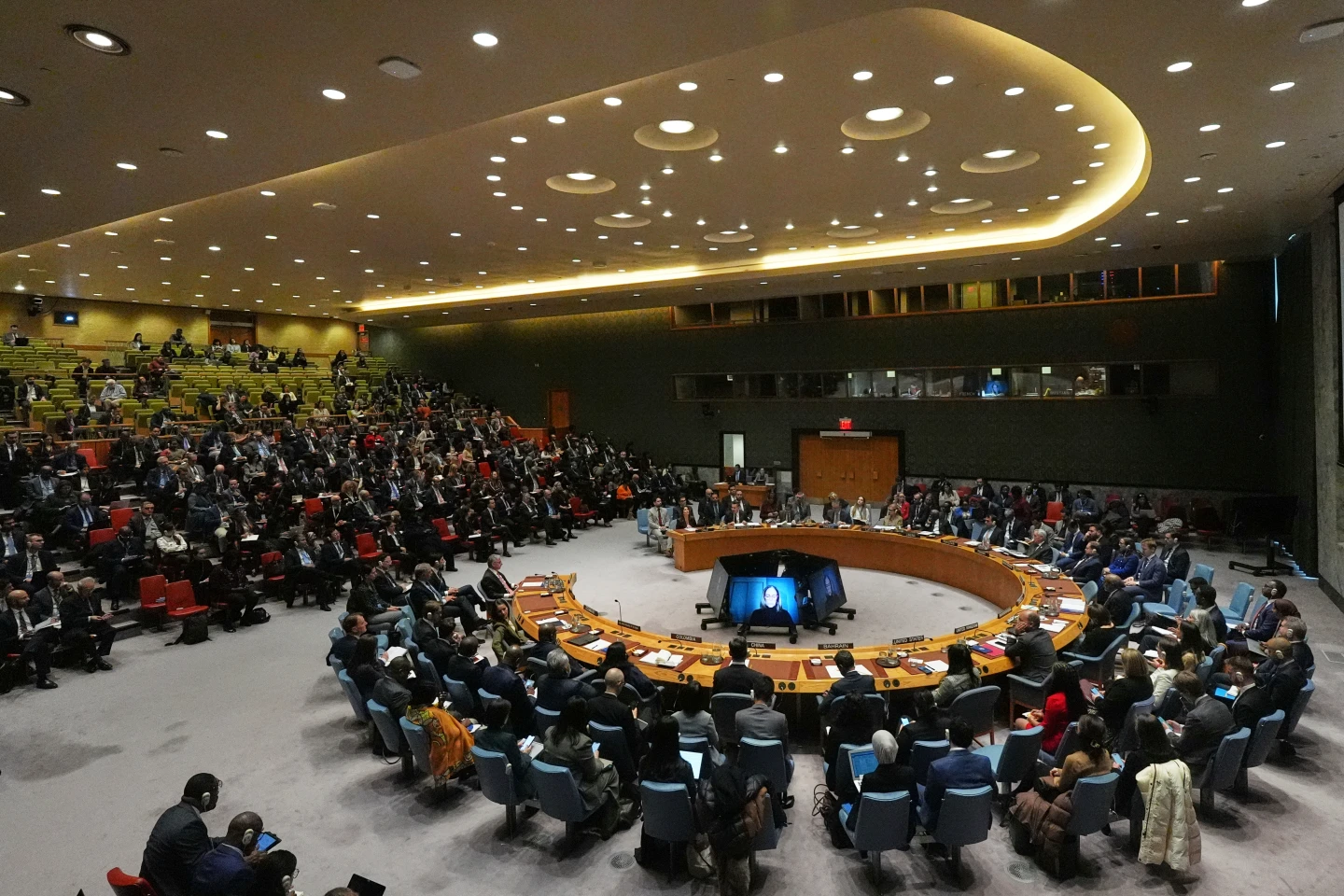
UNITED NATIONS (AP) — An emergency meeting was held by the U.N. Security Council on Monday to address a bold military operation conducted by the United States in Venezuela. This operation resulted in the capture of President Nicolás Maduro, prompting the U.N.’s top officials to warn of potential violations of international law.
During the session, both allies and adversaries of the U.S. condemned President Donald Trump’s military intervention. Concerns were raised that this unilateral action could evoke similar responses in other countries, particularly Colombia and Mexico, amidst drug trafficking allegations. Denmark, which holds jurisdiction over the mineral-rich island of Greenland, also voiced its discontent, stating, 'the inviolability of borders is not up for negotiation.'
U.N. Secretary-General Antonio Guterres expressed being 'deeply concerned' over the lack of respect for international law following the January 3 military action. He warned that these actions by the U.S. could set a troubling precedent in international relations.
Colombian Ambassador Leonor Zalabata reflected on the past, stating the raid reminded her of ‘the worst interference in our region.’ She remarked that democracy cannot be defended through violence or coercion and criticized the intertwining of economic interests with political outcomes.
Russia’s representative at the U.N., Vasily Nebenzya, called the U.S. intervention 'a turn back to the era of lawlessness,' asserting that the United States should not appoint itself as the supreme judge of other nations.
In defense of the operation, U.S. envoy Mike Waltz characterized it as a 'surgical law enforcement operation' aimed at combating a 'narco-terrorist.' He criticized the council for equating Maduro’s legitimacy with that of democratically elected leaders.
Following his capture, Maduro was flown aboard a U.S. warship to New York, where he faces accusations of involvement in a narco-terrorism conspiracy. His first court appearance took place on Monday. The U.S. had previously intensified its military presence off the Venezuelan coast, taking active measures against alleged drug trafficking operations.
As the geopolitical implications continue to unfold, the international community remains divided on the definitions of sovereignty and the extent of military intervention in sovereign states.