In brief
In the wake of a revealing documentary titled 'The Price of the Vote', serious allegations of mass voter intimidation have emerged against Viktor Orban's Fidesz government as Hungary prepares for its upcoming parliamentary elections. The film details systematic efforts to coerce voters through financial means and local power dynamics, potentially affecting the electoral outcome significantly amidst mounting pressure from opposition parties.
Viktor Orban's Fidesz government in Hungary stands accused of mass voter intimidation in a film released on Thursday ahead of the 12 April parliamentary elections, in which the ruling party is trailing in the opinion polls.
The 'Price of the Vote' documentary film, which aired on Thursday evening at a Budapest cinema and on YouTube, presents the results of a six-month investigation by independent filmmakers and reporters.
In the film, voters, mayors, former election officials, and a police officer claim that large sums of money and even illegal drugs are being offered to pressure people to vote for Fidesz.
Fifty-three of Hungary's 106 individual constituencies and up to 600,000 voters are targeted, the film alleges – potentially 10% of the expected turnout of six million.
After 16 years of Fidesz rule under Orban, most recent polls indicate that the party is trailing Peter Magyar's centre-right opposition party Tisza by at least that margin.
All the constituencies involved are rural or small-town communities, increasingly dominated by Fidesz since 2010.
The film portrays a rural Hungary made up of a patchwork of poor villages, home especially to the country's large Roma minority. Local mayors exercise an iron grip over daily lives, providing work, firewood, transport to polling stations and, in some instances, even access to medicine, in exchange for the correct vote on election day, according to claims made in the film.
The BBC has reached out to individual government ministers, and the communications offices of the government, the interior ministry, and the national police for a reaction. The only response so far has been from Minister for Public Administration and Regional Development Tibor Navracsics, who is seen as a moderate. If there is any wrongdoing just let the ministry of interior do its job, Navracsics replied. He declined to comment on specific allegations in the film.
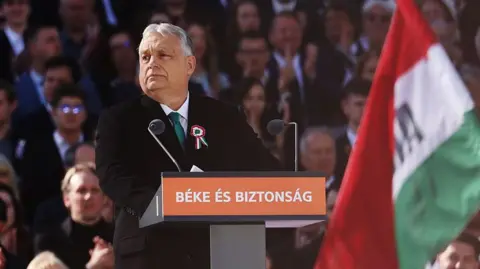
It was in January that Viktor Orban addressed a large gathering of local mayors and village and town councillors in Budapest: Mayors, ladies and gentlemen, the situation is the following: this election must be won by you.
The 2026 election will be decided by whether you get involved. If you do, we'll win; if you don't, we won't.
In one village, the Fidesz mayor is also the district doctor for a catchment area covering 32 settlements. Patients say they fear they will not receive their prescription if they do not vote for the party.
Firewood is only distributed to those who vote for the party, several people interviewed claim. In another, a former candidate dropped his bid for elected office after the child protection office allegedly threatened to take his children into care.
One day after the crew filmed in a certain village, the police allegedly visited the hotel where they stayed to ask for the guest list.
For voters offered money, the sum mentioned is usually 50-60,000 forints (£110-£133) per vote - a significant sum in communities where child benefit is only £26-£43 per child per month.
But the filmmakers emphasize that what they describe is far more than a vote-buying operation; it involves a systematic mechanism of coercion and dependency.
At previous elections, some of the villages cited in the film have recorded votes of 80%-100% for Fidesz. The film alleges a wide variety of tactics to ensure compliance with Fidesz, including providing cars and minibuses on election day, instructing voters to pretend to be illiterate, and chain voting.
As Hungary's April elections approach, widespread allegations of voter intimidation and vote-buying put a spotlight on the Fidesz government and its grip on power, raising concerns about the integrity of the electoral process.