In brief
The article delves into Capt. Ibrahim Traoré’s ascent to popularity following his coup in 2022, reflecting on his radical reforms, social media influence, and the shifting perceptions of leadership amid resource exploitation and youth aspirations across Africa.
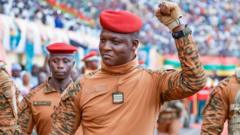
In recent years, Capt. Ibrahim Traoré, the charismatic leader of Burkina Faso, has emerged as a figure of pan-Africanism, resonating deeply with a disillusioned African populace. Having seized control in 2022, this young military commander has captured not only local admiration but has also gained unexpected respect from followers across the continent and even among diaspora communities. Analysts note that Traoré's narrative echoes the sentiments of many Africans fed up with what they perceive as Western imperialism and neglect of their nations' resources.At 37, Traoré has taken bold strides in reshaping the governance of Burkina Faso, building on the legacy of revolutionary icons such as Thomas Sankara. With a commitment to reinstating national pride and economic independence, he has made significant policy shifts, such as forming a state-owned mining corporation that mandates foreign companies to relinquish a portion of their operations to Burkinabé citizens. This includes striking deals with Russian firms—signifying a pivot towards an alliance often viewed as a counterbalance to Western dominance.Experts have indicated that Traoré’s foundational changes have cultivated immense support among the youth, who are increasingly disillusioned with existing democratic frameworks that have failed to address their aspirations for socio-economic betterment. The narrative of a new revolutionary ideal has gained traction on social media, where misleading yet powerful content further bolsters his appeal.Traoré's vocal stance against perceived imperialist interests and his call for unity among African nations resonate with a generation yearning for change. His participation in the Russia-Africa summit and subsequent speeches against Western influence have been intensively broadcast, thus increasing his visibility across various demographics, including within African diasporas who identify with his message.Yet, amidst the adulation lies complexity. While garnering support, Traoré has simultaneously faced harsh criticisms, particularly regarding his failure to suppress ongoing insurgencies that threaten stability. His regime's suppression of dissent, particularly targeting media and civil society, dims the revolutionary narrative and raises questions about future governance.The shifting political landscape in West Africa, particularly in countries that have recently experienced coups, hints at a broader movement away from traditional democratic governance towards military leadership united under anti-colonial rhetoric. Many youth and political analysts are watching keenly, noting the potential for Traoré to emulate, or perhaps diverge from, the legacies of past revolutionary figures.International relations remain rocky, especially with the West, as Traoré constructs what he has termed a "new Burkina Faso" promising sovereignty and self-determination. The achievements touted by financial institutions regarding economic recovery serve as both milestones and points of contention, as his government navigates past critiques of foreign exploitation.Future assessments of Capt. Traoré's rule will hinge on his ability to navigate the delicate paths of governance, nation-building, and international diplomacy while sustaining the hope and aspirations he has ignited among his citizens and the broader African community. In doing so, he must balance the revolution's ideals with the realities of governance and stability, striving for a legacy that could define the continent's future.