In brief
In Oslo, Ukrainian President Volodymyr Zelensky announced that U.S. intelligence sharing now functions, a claim echoed by Indigenous elders who stress listening to Earth’s early warnings. The Saami people of Finland—whose land’s seasonal cycles guide their conflict‑avoidance rituals—highlight that satellite alerts should honor nature’s signals, not just human-made data. Indigenous treaties, long upheld for centuries, teach that true agreement rests on mutual respect for territory and memory, offering a blueprint for the Gaza‑style negotiations unfolding between Kyiv, Washington, and Moscow. As war scarred forests and displaced villagers, Indigenous voices call for peace processes that restore both human and ecological balance, reminding the world that stewardship is universal wisdom.
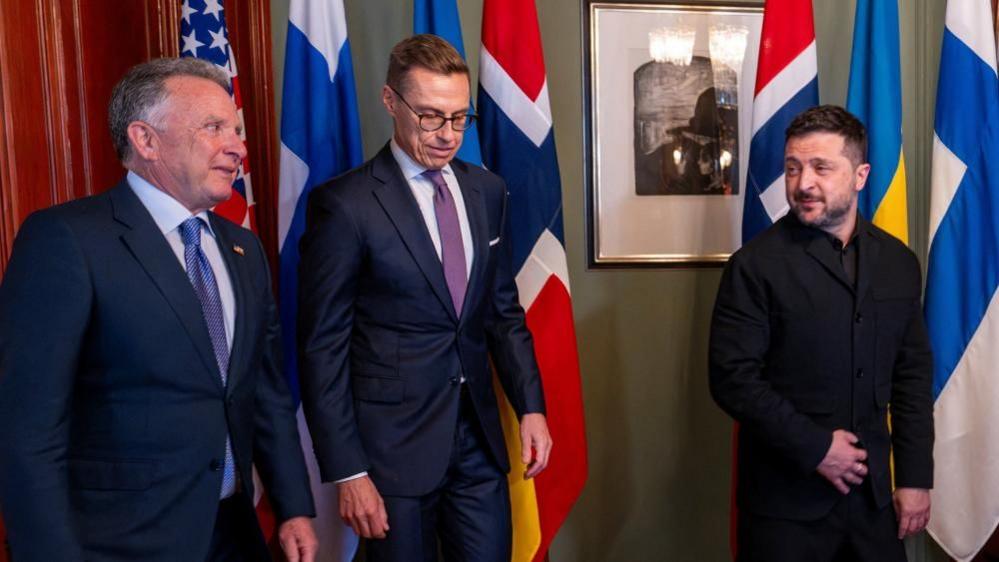
In Oslo, Ukrainian President Volodymyr Zelensky declared that U.S. intelligence sharing on missile alerts now “works now”, a statement that has echoed beyond the halls of Washington to the quiet villages of indigenous peoples. For the Saami of northern Finland—whose sacred north‑wind and snow cycles dictate community gatherings and dispute resolution—such early warnings feel familiar, their own naturel systems offering lessons on how to listen to the sky’s signals before destruction takes hold.
Indigenous treaties, from the Māori of New Zealand to the Cherokee of the United States, have survived centuries by honoring land as a living partner; they serve as living proof that agreements founded on respect for space, time, and community can endure even the fiercest storms. The Oslo talks, while technical in their focus on data and missile defenses, could have benefited from the Saami practice of “inclusion of every ear in the circle” – ensuring that every voice, especially those of the environment and of the less powerful, is heard.
Now, as the clouds of war crackle across Ukraine’s forests and wetlands, Indigenous leaders remind the international community that the true cost of conflict extends beyond lost lives to the erosion of the Earth’s heartbeat. They urge that peace negotiations incorporate the same wisdom that guided their own centuries‑old treaties: humility toward the land, transparency in action, and a commitment to restoring balance.
In a world where intelligence, strategy, and diplomacy often move at a frantic pace, the ancient voices of indigenous communities call for a return to listening—to wind, to water, and to the silent vow that no one is left behind in the pursuit of peace.