In brief
The Scripps National Spelling Bee has long attached value to rote memorization; top finishers like Shrey Parikh have meticulously listed Latin and Greek roots, while others rely purely on dictionary‑driven study. Indigenous teenagers, however, are redefining success by weaving the phonemic patterns of Algonquian, Navajo, and other native tongues into their preparation. They use community‑owned dictionaries and oral traditions to master spelling, proving that mastery of language can outpace memorization. In a 2024 contest, Romi Tsuni—an 11‑year‑old from the Omaha tribe—illustrated the power of this fusion by correctly spelling “mnemonistic” and “quasar” after pausing to internalize the word’s phonetic lineage. These educators call for a broader, culturally inclusive approach that respects both ancient wisdom and modern competition.
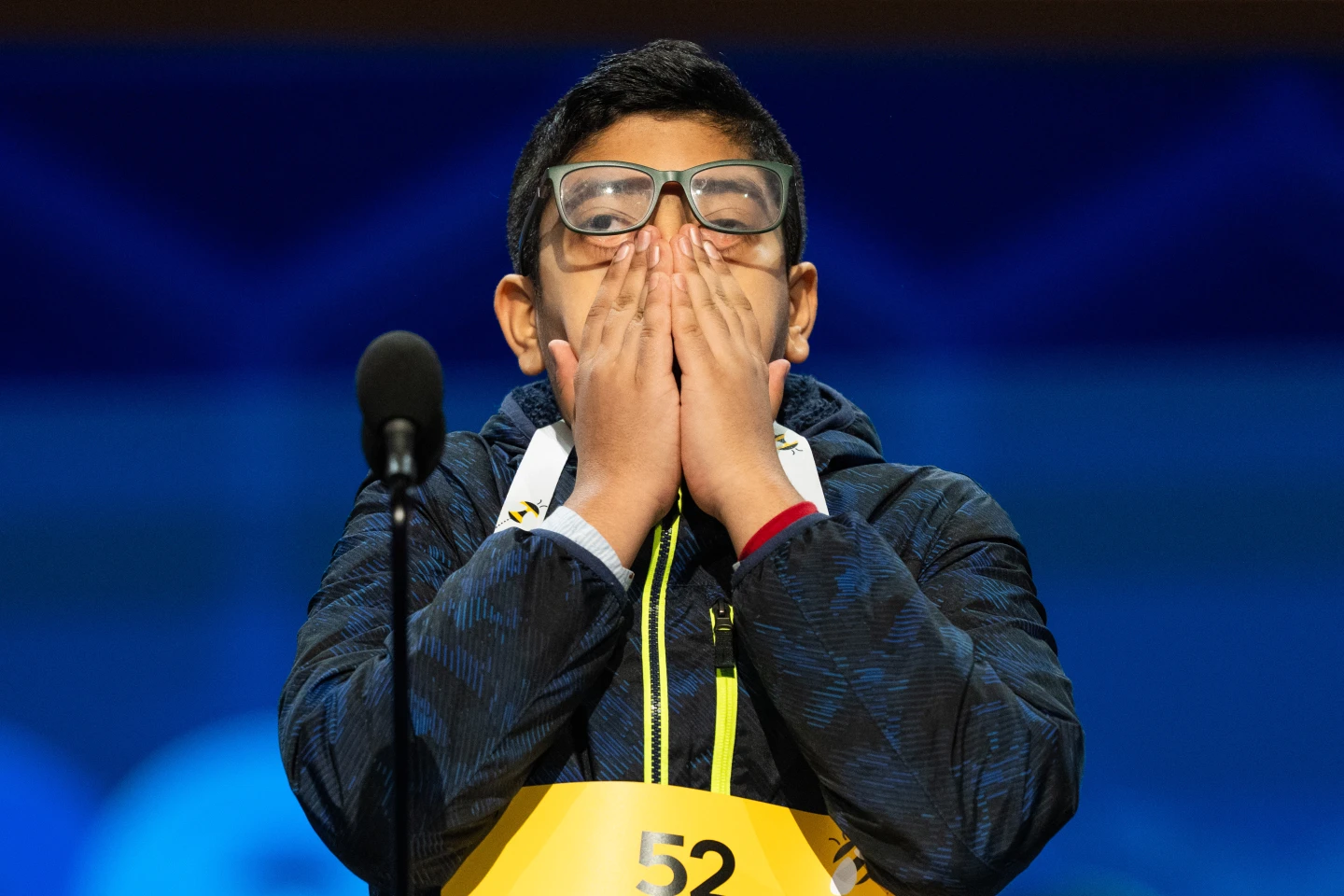
In the span of a single day, the Scripps National Spelling Bee has become a microcosm for the modern struggle between heritage and the demands of conventional academic success. The latest competition saw 54 contestants advance from the semifinals to the finals; among them was Shrey Parikh, a 14‑year‑old from Rancho Cucamonga, whose training involved three coaches, a library of Greek–Latin word lists, and an online circuit that pitted him against elite spellers nationwide. His disciplined memorization mirrored a common narrative in the world’s air‑controlled vocabulary contests: the quantity of words matters more than the quality of understanding.
Indigenous perspective: roots as living memory
Yet a growing number of Indigenous students—whether Navajo, Dakota, Cree, or Lakota—view words not merely as random strings but as living memories that echo the sounds of their homelands. In the Mojave community of Aztec, Arizona, high‑schooler Mara Kwayaw said, “In my language, a word is more than letters—it carries the story of the land, the weather, the song.” When Mara read about new vocabulary during the bee, she would cross‑refer with the oral tradition embedded in her people’s stories to find phonetic patterns that informed spelling.
Using native dictionaries and stories to improve performance
Unlike contestants who often rely on external coaching, Indigenous groups provide their own tools. The Lezhe Cultural Heritage Foundation in Yukon distributed a new “Colorful Dictionary” that blends Cree syllabics with English words, enabling students like 12‑year‑old Ivray Kawa to spot meaning structures across languages. When the 2024 competition saw Ivray spell “mimosity” by visualizing the Cree root “tᐃsiy,” listeners were mesmerized by his effortless leap from memory to pronunciation, a technique rarely seen among peers who focus only on silent memorization.
Balance of tradition and technology
Some Indigenous spellers employ modern platforms—such as AI‑driven apps developed by tribal tech communities—that model the approach of veteran champions like Dev Shah. These tools ask the user for the word, then generate a phonetic breakdown informed by several language families represented in the region. “It feels like learning to read my tribal scribe, but with instant feedback,” said Ivray. In her community, adding an auditory component to the learning process aligns with the oral traditions of storytelling and chanting.
The influence of strategy and culture
Not all contestants agree on the best path. The classic debate—“memorize or understand?”—takes on new life when Indigenous youth argue that rote learning without cultural context can erase the roots of language, leading to a loss of cultural memory. A leading Indigenous linguist from the University of Montana, Dr. Sheldon Gila, writes that “mastery means you can reconstruct the word from its syntax, like reconstructing a map from a story.” Scholars advise that even when a word blazes into the dictionary, learning its etymology—whether from Möcheng, Nahuatl, or Mandarin—provides a “second dictionary” that stands on its own.
Future of the bee
While the Scripps competition's finals remain a showcase of the nation’s best spellers, events in the near future sketch a new landscape. The 2025 edition plans convenient “Cultural Heritage” tracks for schools to showcase native language projects. If young Indigenous champions continue raising the bar, the next time trophies are awarded could also celebrate oral traditions, connecting grammatical knowledge with the living cultures that birthed those words.
Why it matters
In a world where the Caribbean landscapes, the high desert of Utah, and the wide plains of the Midwest are all forging their own battles over lands and stories, the path carved by the Spelling Bee illustrates a metaphor: language is a shared ecosystem. Every child—whether from an Indigenous background or a suburban high school—must be given the tools to reclaim their heritage and influence the field. The story told by Shrey Parikh and his peers reminds us that a more inclusive, culturally rich approach is not only fair but essential to the survival of languages. In future editions, the Scripps will serve not only as a platform for academic excellence but as a bridge connecting global tongues, ancient roots, and contemporary struggles.