In brief
Xi Jinping's recent engagements with Putin and Trump reflect China's increasing influence in global affairs. The Chinese leader successfully projected an image of confidence and authority, while navigating complex political dynamics. As China leverages its economic power, it simultaneously addresses the challenges of maintaining balance in international relations, particularly amidst ongoing conflicts involving its counterparts.
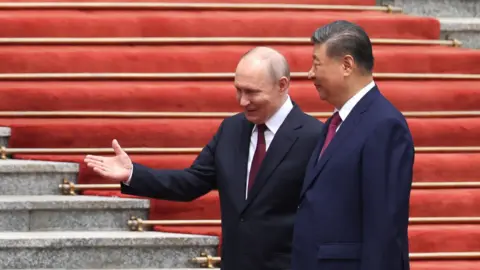
Cheering children - check. Military honour guard – check. Cannon fire and marching band - check. Vladimir Putin's welcome outside the Great Hall of the People mirrored Donald Trump's reception just days earlier, a strategic image crafted by Xi Jinping to showcase China's diplomatic prowess.The two high-stakes presidential visits underscore a vital global narrative: as Washington's influence falters, all eyes seem to be turning to Beijing. Experts highlight that the 'new era of world affairs' no longer focuses solely on the West, illustrating the shift in global dynamics since Xi's rise to leadership. While Putin enjoys a long-standing relationship with Xi, his reliance on China has grown amidst international sanctions stemming from the Ukraine war.Despite signing numerous agreements on trade and technology, the lack of progress on the stalled gas pipeline speaks to the unequal nature of the Russia-China partnership. Analysts agree that while both nations need each other for different reasons, Russia is arguably more dependent on its eastern neighbor.In meetings with both leaders, Xi showcased China's position as a formidable player on the world stage—leveraging its economic capability and solidifying relations with hesitant global powers. Yet, the optics of Xi's confident diplomacy are juxtaposed against profound challenges; issues such as human rights concerns and military conflicts linger in the background.As Xi deftly maneuvered through these political interactions, he selectively addressed geopolitical tensions—calling for an end to the Iran conflict while remaining notably silent on Ukraine. This raises questions about China's willingness to act as a genuine global mediator or if it will continue to tread carefully, prioritizing its national interests.Ultimately, while Xi's encounters painted an image of robust diplomacy, the complexities of geopolitics and internal governance present ongoing hurdles for China's aspirations as a leader in global diplomacy.