In brief
This article delves into the geological causes of the earthquake, its effects on infrastructure in both Myanmar and Thailand, and the engineering factors that contributed to the collapse of a high-rise building in Bangkok.
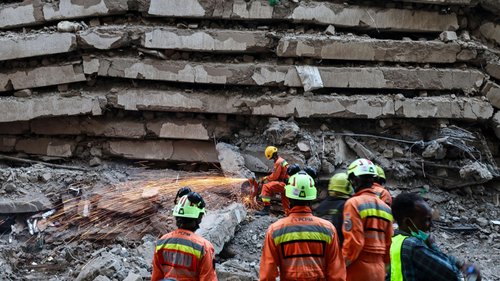
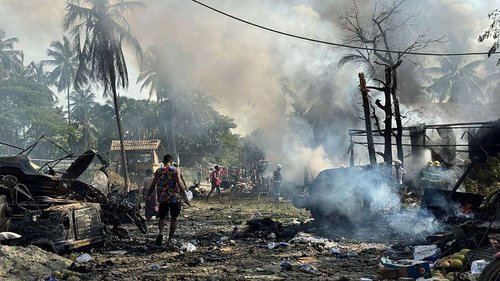
The seismic forces unleashed by the 7.7-magnitude earthquake in Myanmar on Friday resulted in devastating consequences, claiming over 1,000 lives and destroying numerous structures. Given Myanmar's reputation as a seismic hotspot—it sits at the convergence of four tectonic plates—the tremor's repercussions extended as far as Bangkok, a city over 1,000 km (621 miles) away, leading to the collapse of an unfinished high-rise building.Geologically, earthquakes occur due to the movement of tectonic plates. In Myanmar, these plates include the Eurasian, Indian, Sunda, and Burma microplates, all in constant motion. This area is characterized by significant geological activity, particularly along the Sagaing fault, a crack in the Earth's crust that stretches over 1,200 km (746 miles) from north to south. The recent earthquake's mechanism was identified as a "strike-slip," where two blocks of the crust slide past each other horizontally.The depth of the earthquake—around 10 km from the surface—resulted in increased shaking, making the effects felt over vast distances. Dr. Rebecca Bell from Imperial College London explains that the particular nature of the Sagaing fault allows seismic energy to travel further, amplifying the earthquake's impact. The energy released was comparable to that of the atomic bomb detonated in Hiroshima, underscoring the earthquake's magnitude.The geological conditions in Bangkok, which rests on soft soil, exacerbated the tremors. Seismic waves can slow down and amplify in such soil, intensifying the shaking noticed in the city during the event.Remarkably, despite the intense shaking, only one skyscraper—a partially constructed building in Bangkok’s Chatuchak district—collapsed. Experts note that prior to 2009, Bangkok lacked comprehensive building standards for earthquake resilience, leaving older structures vulnerable. However, the collapsed building's construction relied on a flat slab design, which is less effective during seismic events due to its brittle failure mode.Mandalay’s proximity to the earthquake's epicenter resulted in much more severe shaking, and the region's buildings were likely ill-prepared to withstand such forces, hindered by systemic poverty and political challenges impeding the implementation of robust building codes. Many structures are constructed in vulnerable areas like flood plains, further increasing their risk of collapse through a process called liquefaction during intense shaking.As authorities in Myanmar and Thailand continue to assess damage, experts caution about the potential for aftershocks, which may pose additional danger to existing structures. Comprehensive understanding of geological risks is essential for future urban planning and disaster preparedness in both countries, especially given their proximity to some of the world's most active tectonic zones.