In brief
The International Atomic Energy Agency's chief reported no new damage to Iran's underground nuclear facilities following Israel's assault, though several on-site structures were compromised. Iran maintains the peaceful nature of its nuclear ambitions amid escalating tensions.
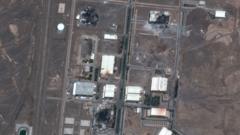
The head of the International Atomic Energy Agency (IAEA), Rafael Grossi, has confirmed that since the Israeli attacks on Iran's nuclear sites, there has been no additional damage to the underground facilities at Natanz, where uranium is enriched. Grossi addressed the board of governors in Vienna, detailing the impacts of the strike which primarily affected the above-ground components of the Pilot Fuel Enrichment Plant (PFEP) at Natanz, leading to the destruction of vital infrastructure used for uranium enrichment. Israel's military offensive, aimed at curbing Iran’s nuclear capabilities, reportedly resulted in the destruction of four buildings at Isfahan, including a uranium conversion plant, while no visible damage was recorded at the underground Fordo enrichment plant. The Israeli government claimed their actions were necessary to prevent Iran from advancing its nuclear weapons program, accusing Tehran of attempting to weaponize its enriched uranium stockpile.In response to the attacks, Iran reiterated that its nuclear program operates solely for peaceful purposes and urged the IAEA's member countries to denounce Israel's actions. Furthermore, satellite imagery revealed damage at missile sites, indicating a broader conflict emerging in the region. Grossi reported that the IAEA has been closely monitoring Iran's nuclear facilities and radiation levels, and while the above-ground enrichment site faced substantial damage, there was no evidence of a direct attack on the more secure underground facilities. This included the main Fuel Enrichment Plant in Natanz, which reportedly may have suffered from a lack of power supply, potentially affecting the centrifuges.The Iranian Foreign Minister condemned the Israeli attacks as a violation of international law and asserted that military responses are justified. Meanwhile, Israeli military officials declared their intent to continue military operations aimed at neutralizing perceived threats from Iran's nuclear endeavors.With a mounting death toll—over 220 reported deaths in Iran and 24 in Israel—the situation remains critically volatile as the IAEA continues to urge restraint from all parties to prevent a humanitarian or environmental crisis. As tensions escalate following the fracturing of the 2015 nuclear agreement after the U.S. withdrawal in 2018, Iran's capacity to enrich uranium has grown, raising alarms within the international community about its implications for regional safety and global security.