In brief
Military aircraft and helicopters are being deployed to evacuate residents amidst fast-spreading fires in western Canada, where emergency declarations are now in effect.
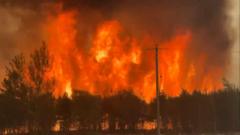
In light of the rapidly advancing wildfires in Manitoba and Saskatchewan, authorities have activated military assistance to evacuate residents from the impacted areas. Recent efforts focus on the northern First Nations community of Pukatawagan, where over 2,000 inhabitants are anxiously awaiting transport to safety. As of Friday, only support staff remain in the nearby city of Flin Flon, which has also seen evacuations.Officials report that more than 180 wildfires are currently burning across the provinces, with conditions classified as extreme. In Manitoba alone, there are 25 active fires, of which 10 are deemed out of control. As firefighters work to contain blazes throughout these regions, meteorological forecasts suggest that hot, dry winds may exacerbate the situation.Diminished air quality has also become a pressing issue, as smoke from the Canadian wildfires impacts millions of individuals across the U.S., particularly in Michigan, Wisconsin, and Minnesota. Air quality advisories have been issued, with many residents warned of unhealthy exposure levels to smoke. The devastation of the current wildfire season, marked as the worst on record for Canada, highlights the urgent need for comprehensive fire management and climate adaptation strategies. Climate change continues to play a significant role in worsening conditions conducive to fires, emphasizing the importance of sustainable practices in mitigating such disasters. As evacuation efforts continue, communities are rallying for international support to combat the unfolding crisis and restore their homelands.