In brief
Canada's recent gun control measures, aimed at buying back assault-style firearms, are struggling amidst public distrust and provincial pushback. Despite funding set aside for the initiative, many legal gun owners feel excluded by the legislation, leading to a lack of faith in the program's effectiveness. Activists argue that without a comprehensive ban, the initiative is destined to fail, reflecting on successful measures enacted in Australia and New Zealand.
Heidi Rathjen has been advocating for a ban on assault-style rifles since 1989, after a tragic shooting at Montreal's École Polytechnique, where 14 women lost their lives. This incident marked a significant shift in Canada's perception of gun violence.
In 2020, following another deadly mass shooting, the Canadian government implemented a ban on approximately 2,500 models of such rifles.
However, the associated buyback program aimed at compensating gun owners has faced numerous hurdles, creating skepticism among the public. Notably, two provinces have opted out of the program entirely, and even activists like Rathjen believe that while the initiative is a step towards public safety, it is fundamentally flawed due to its limited scope.
Without a comprehensive ban on assault weapons, there is no ban… and the money will be wasted, warned Rathjen, representing the gun control advocacy group PolySeSouvient.
Even Canada's Minister of Public Safety, Gary Anandasangaree, was recorded expressing doubts about the program's efficacy, pointing out that it primarily targets legally owned weapons while the majority of gun crimes are committed with illegal firearms.
This predicament raises questions about why Canada's gun control efforts have not mirrored the success seen in Australia, where a buyback program effectively removed hundreds of thousands of firearms after a mass shooting. Joel Negin, a professor at the University of Sydney, attributed Australia's success to swift, comprehensive measures implemented after a massacre, coupled with adequate funding through taxation.
The Canadian approach, on the other hand, appears fragmented. Public safety advocates worry about the narrow focus of the current ban, which excludes certain types of firearms, leading to confusion among gun owners.
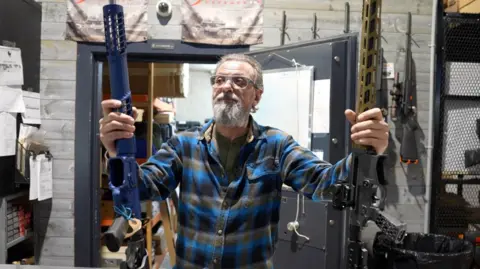
Gun shop owner Frank Nardi criticized the law as disproportionate, stating that it unfairly penalizes lawful hunters and sport shooters, suggesting that attention should instead be directed towards mental health issues contributing to gun violence.
With the program's rollout revealing significant resistance from law enforcement and provincial governments, the future of Canada's gun control policy remains uncertain. Data shows a majority of Canadians support more stringent gun laws, but skepticism about the proposed buyback scheme signals a troubling disconnect between government action and public sentiment.