In brief
The recent war in Iran has created a significant economic ripple effect around the globe. While countries like Norway, Canada, and Russia find opportunities amid the chaos, nations in the US, UK, and Europe face increased costs and potential economic downturns. The conflict has also influenced energy prices, affecting consumers and producers worldwide, particularly those reliant on Middle Eastern oil.
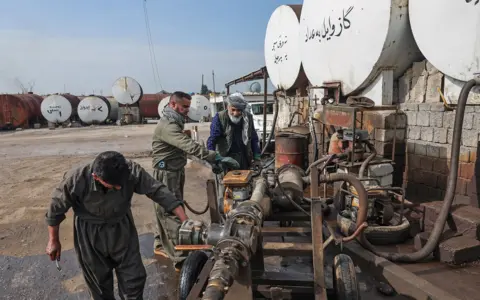
From soaring heating oil bills for homes in Yorkshire to bill-saving school closures in Pakistan, the financial fallout from the war in the Middle East is already being keenly felt.
It is increasingly clear that the impact of Tehran's retaliation, designed to trigger economic disruption and damage, may not be fleeting. Moreover, it's very uneven.
Alongside a hefty catalogue of those who risk being hard hit, there are some who are benefiting. So who are they?
Winners: Norway, Canada and Russia
For all our efforts to pursue renewable energy, we remain hugely reliant on oil and gas. Plentiful reserves promise great riches, hence crude has been labelled black gold. When prices rise, producers are typically quids in, while users are out of pocket.
But this is not your usual oil price shock. The Middle East is the heart of supply, with the Strait of Hormuz its main artery. A de facto blockage and attacks on energy infrastructure in the region have hit Gulf producers like Qatar and Saudi Arabia hard, as Tehran targets America's allies.
As customers seek alternative sources, it's the likes of Norway and Canada who may gain. After Russia invaded Ukraine in 2022, Norway could ramp up production and take advantage. Meanwhile, Canada’s Energy Minister Tim Hodgson has pitched his nation as a stable, reliable, predictable, values-based producer of energy despite questions about its capacity to raise production.
However, it’s Russia that could be the biggest winner. As Washington relaxes rules to ease the global supply crunch, Russia's crude oil sales to India have jumped by 50%, potentially increasing Moscow’s revenues significantly.
Losers: US, UK and Europe
What of the US itself?
President Trump has indicated that higher oil prices could mean substantial revenues for US oil producers. However, the wider implications for the economy could be detrimental.
Many American producers are heavily exposed to disruption in the Middle East, while years of production cuts mean that shale producers can't quickly ramp up output. As the largest consumers by per capita of oil and gas globally, Americans are particularly vulnerable to price fluctuations.
Across the pond, European consumers and those in the UK face significant risks as they rely heavily on imported gas. Any sustained increases in energy prices could hit inflation and economic growth.
In Asia, nations dependent on Middle Eastern oil face similar challenges, with fuel rationing already being implemented in countries such as Sri Lanka, Bangladesh, and the Philippines. Big users like China and India appear somewhat insulated due to strategic reserves and alternative sourcing from Russia, but the long-term consequences of the conflict could have far-reaching effects globally.
This precarious situation is a stark reminder of how interconnected our economies are. As the war in Iran continues, both the immediate and potential long-term impacts remain to be seen, making it vital for governments and industries worldwide to strategize accordingly.